Deep in the Luangwa Valley: Safari Stories from South Luangwa, Part 2
Nkonzi Camp (Gavin Opie Safaris)
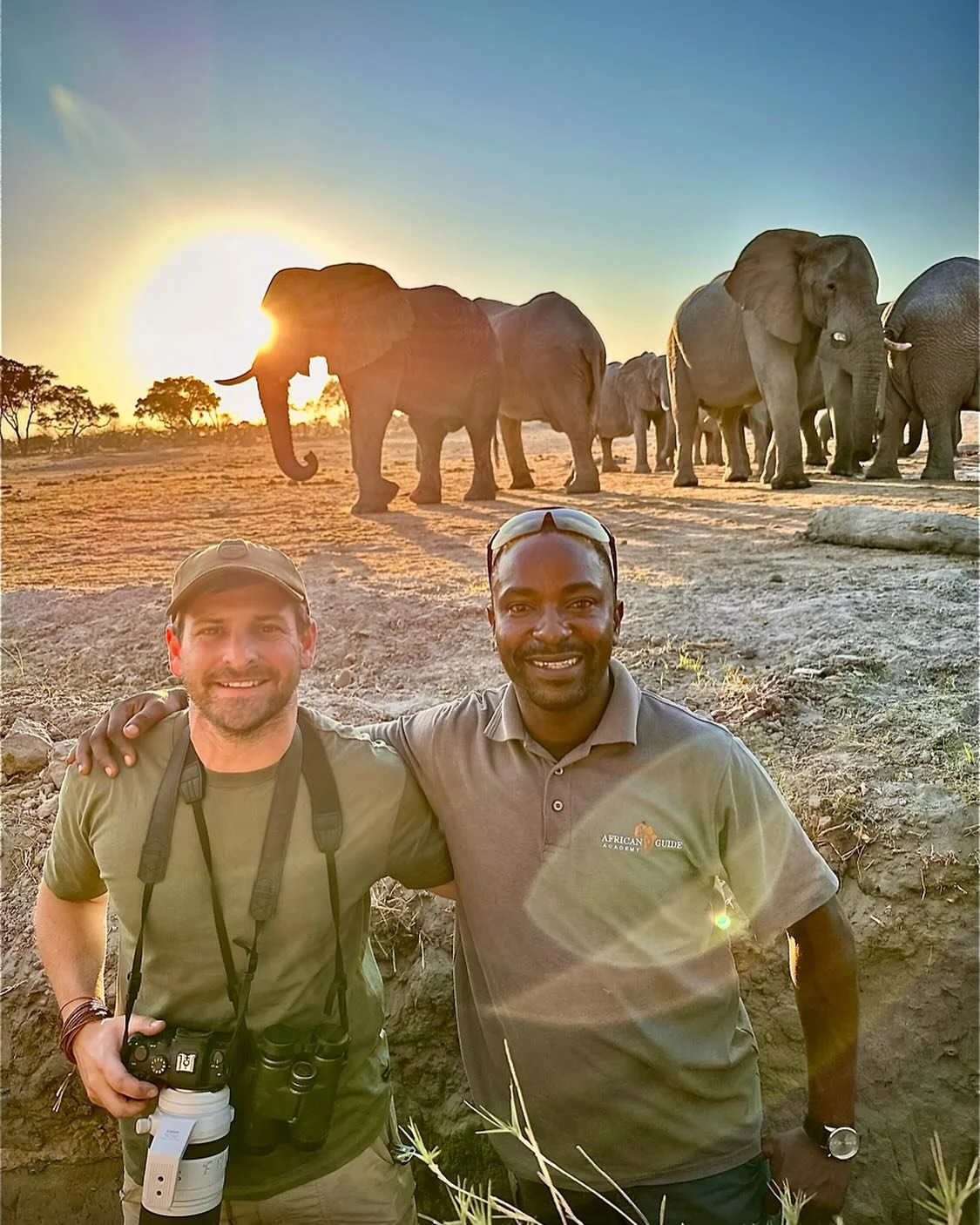
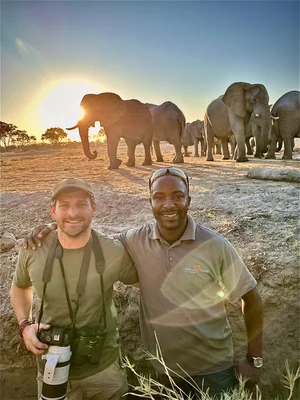
After five unforgettable nights with The Bushcamp Company in October 2025, in the southern reaches of South Luangwa National Park in Zambia, continued north east into a more remote part of the park situated north of Mfuwe Lodge. For the final four nights, we would be based at Nkonzi Camp, operated by Gavin Opie Safaris — a classic, low-impact bush camp set deep in wilderness, far from any permanent tourism infrastructure.
This second half of the safari would be slower, quieter, and more immersive — a reminder that some of the most rewarding moments in the bush come not from constant action, but from patience, presence, and time spent listening.
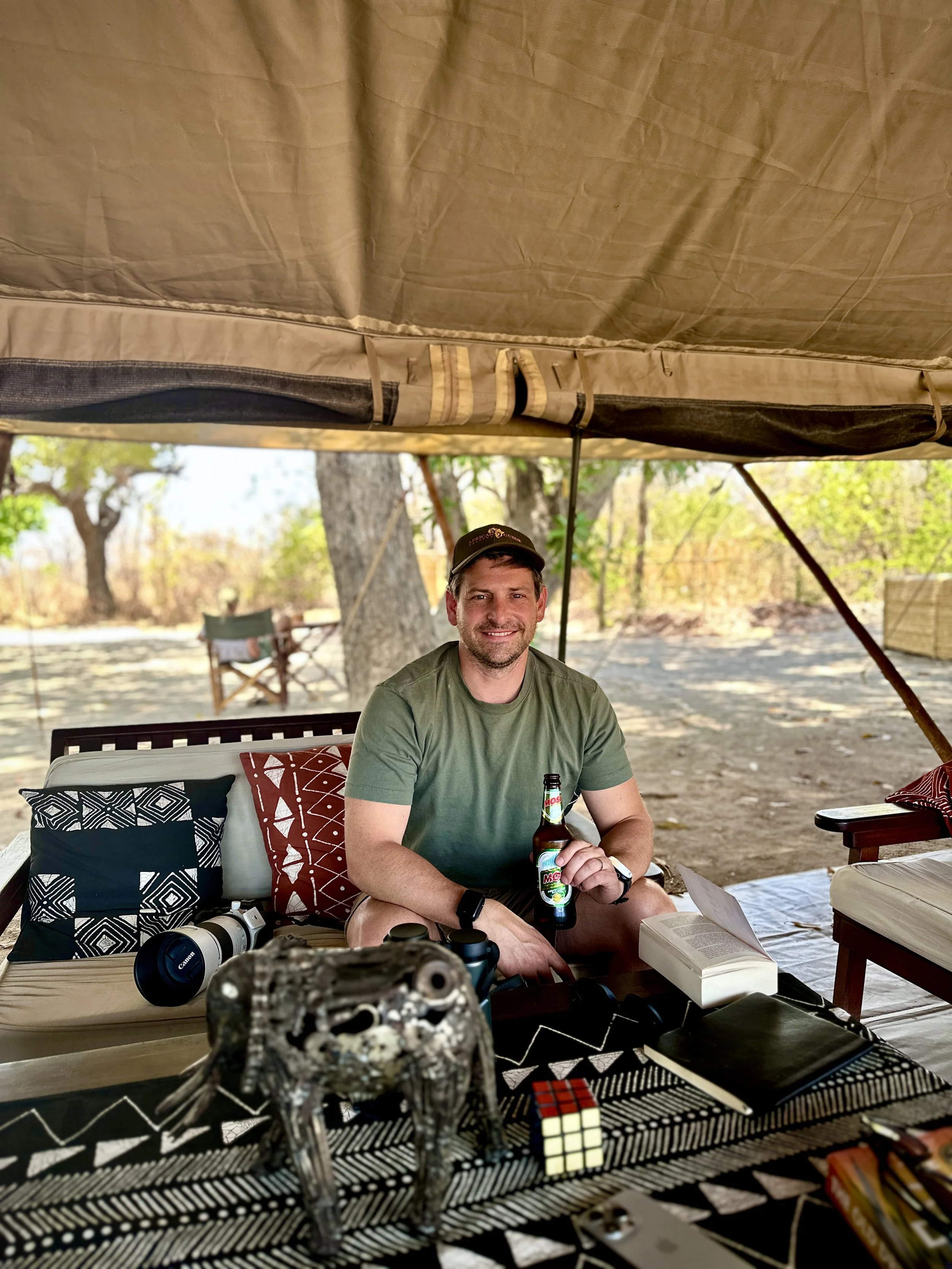
Day 6 – Into the Remote North & Painted Wolves at Last
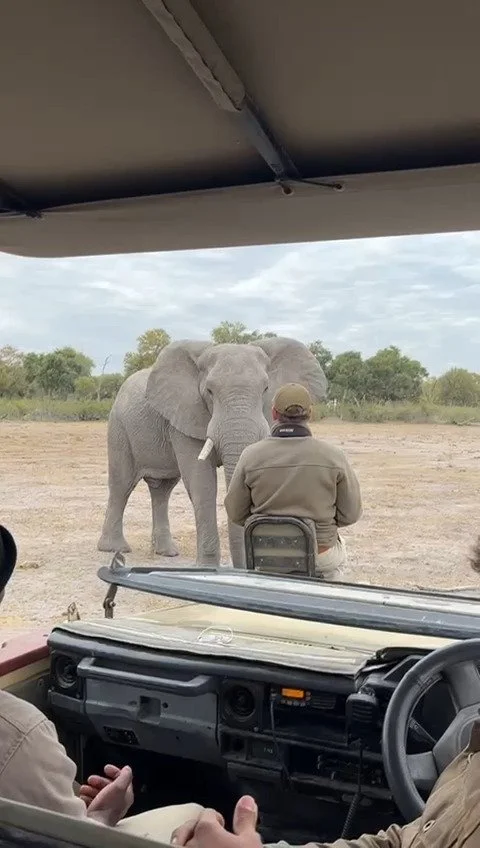
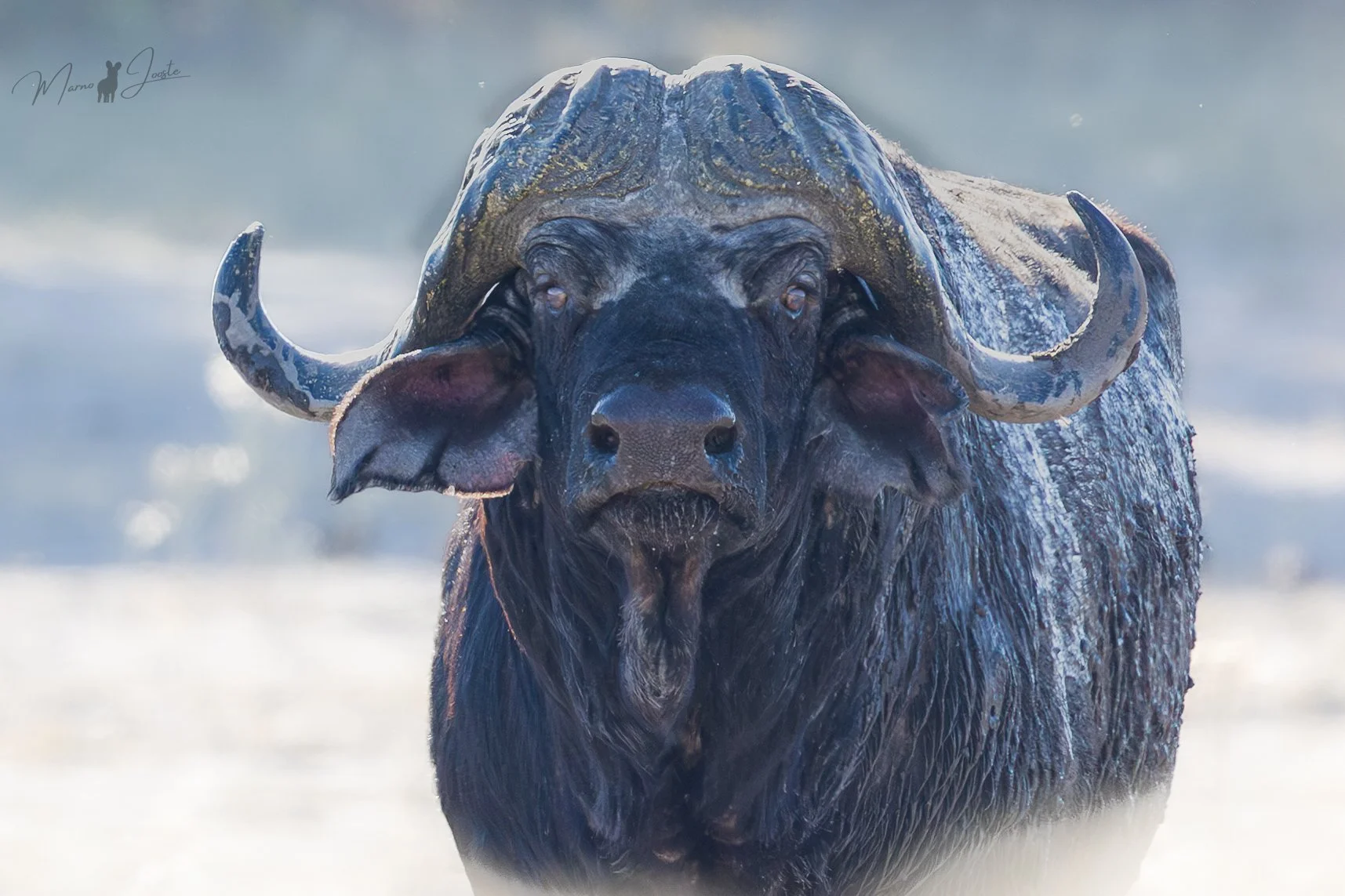
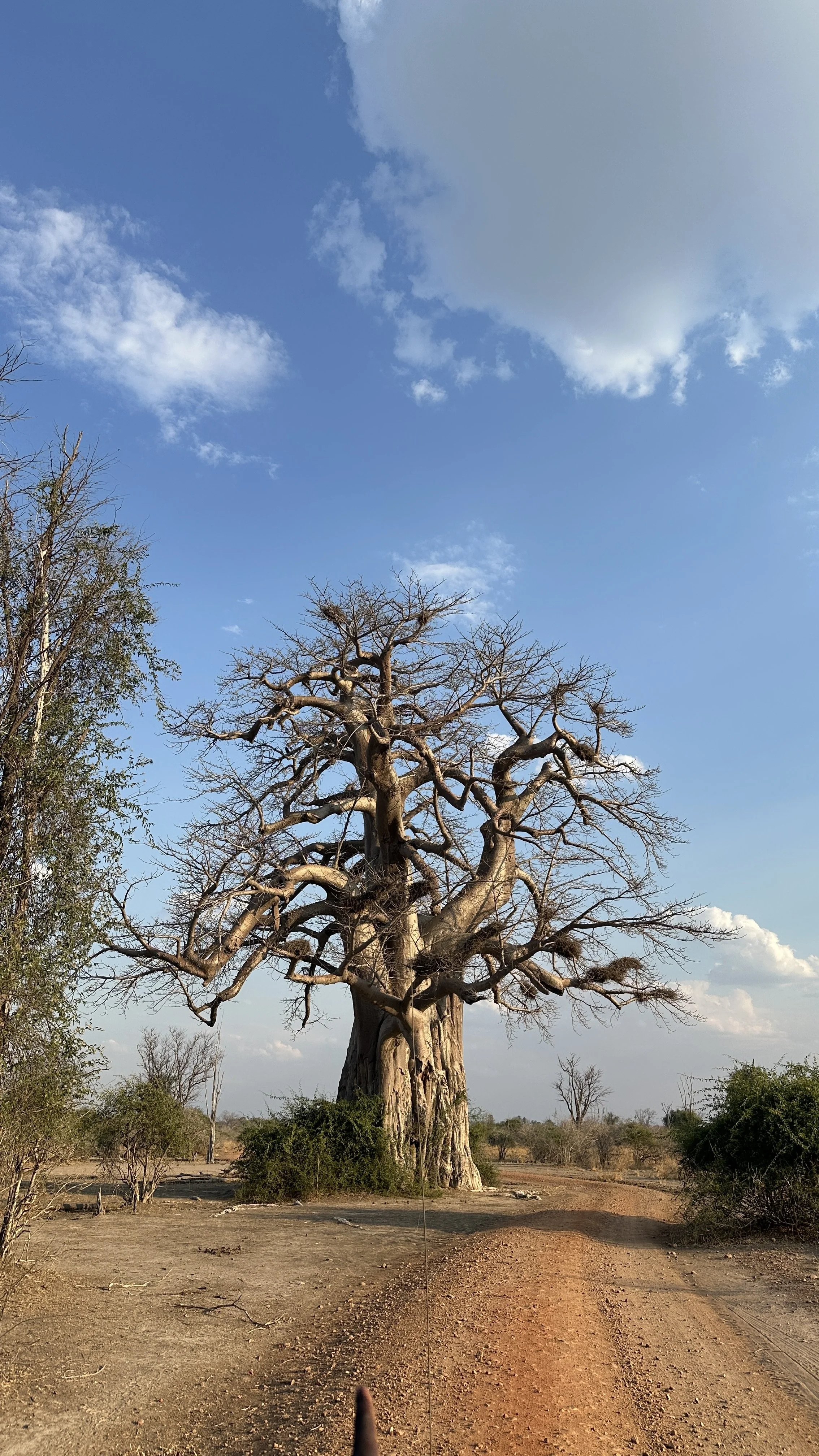
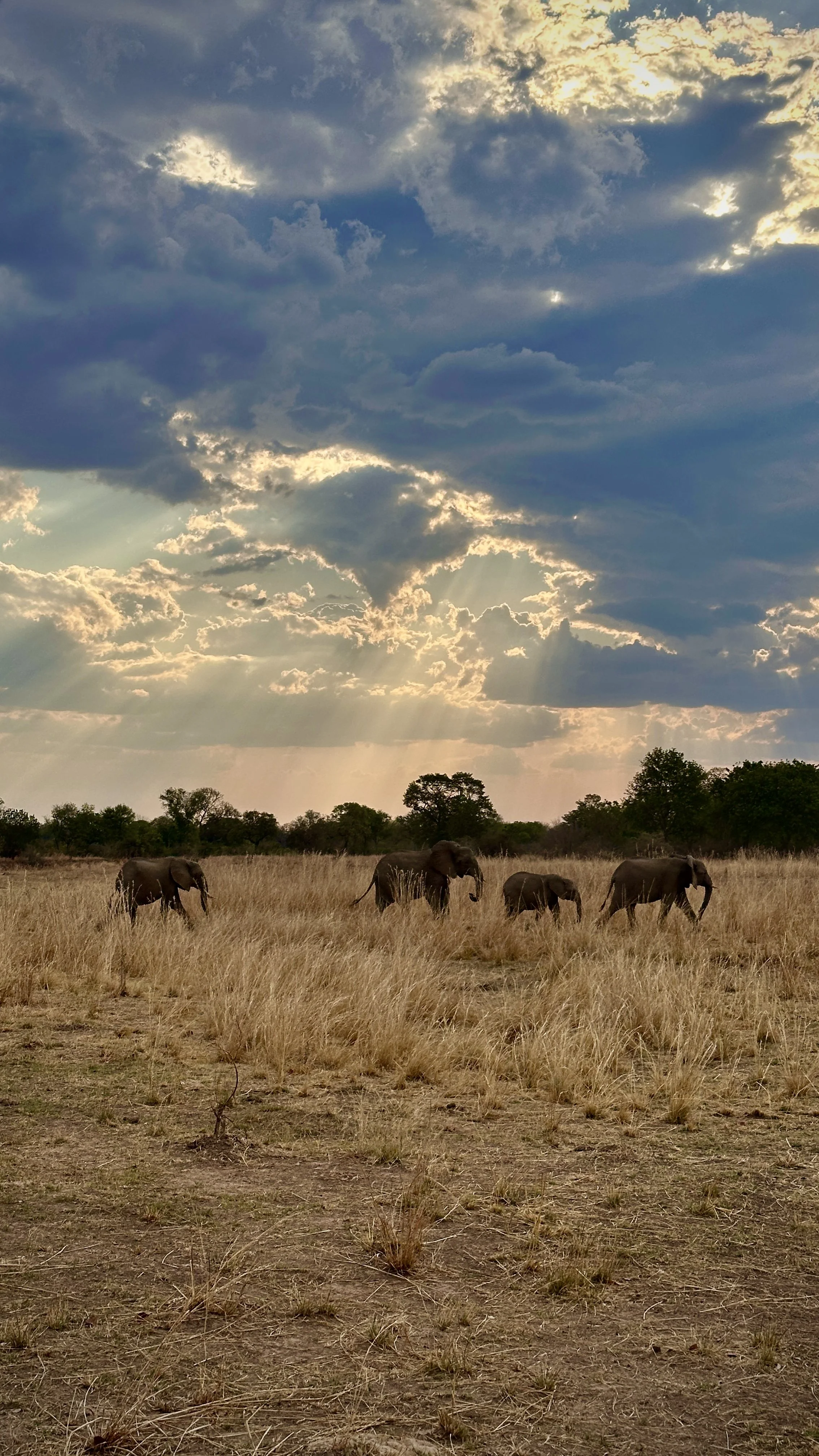
We departed Kapamba Camp early for the long transfer north, travelling through vast tracts of untouched woodland. The drive itself was a safari in motion — a steady flow of birdlife, scattered elephant sightings, and yet another impressive herd of buffalo moving purposefully through the bush.
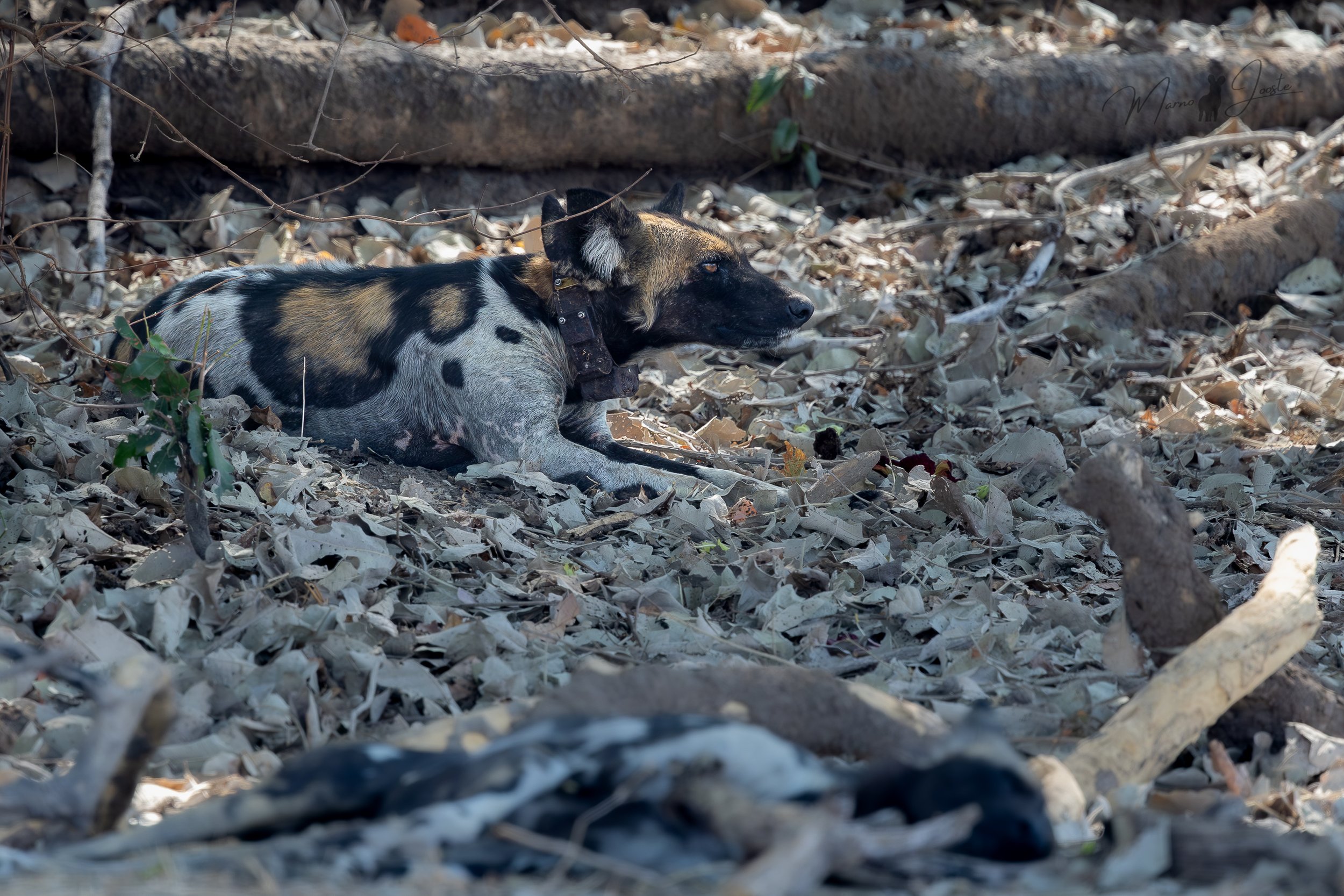
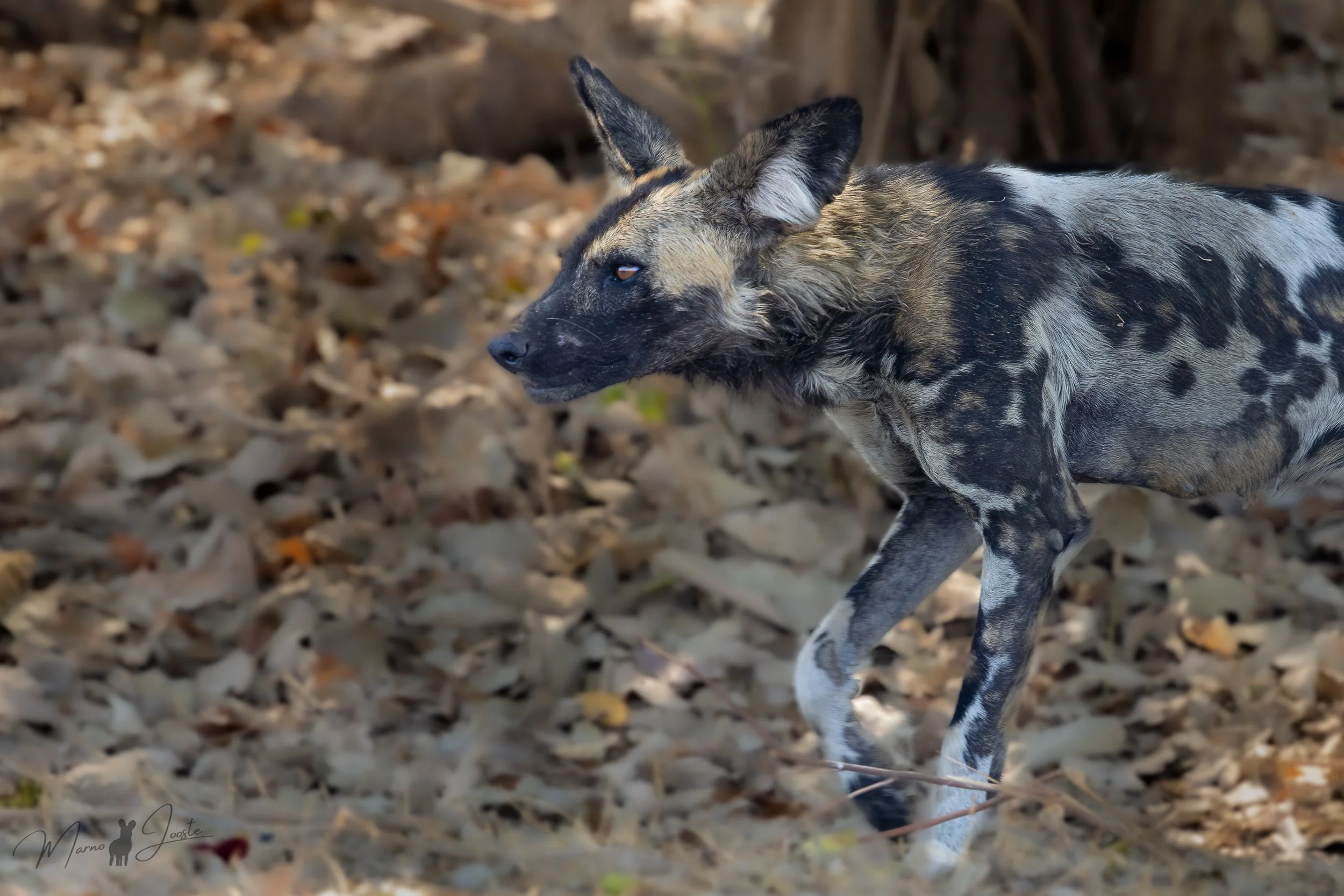
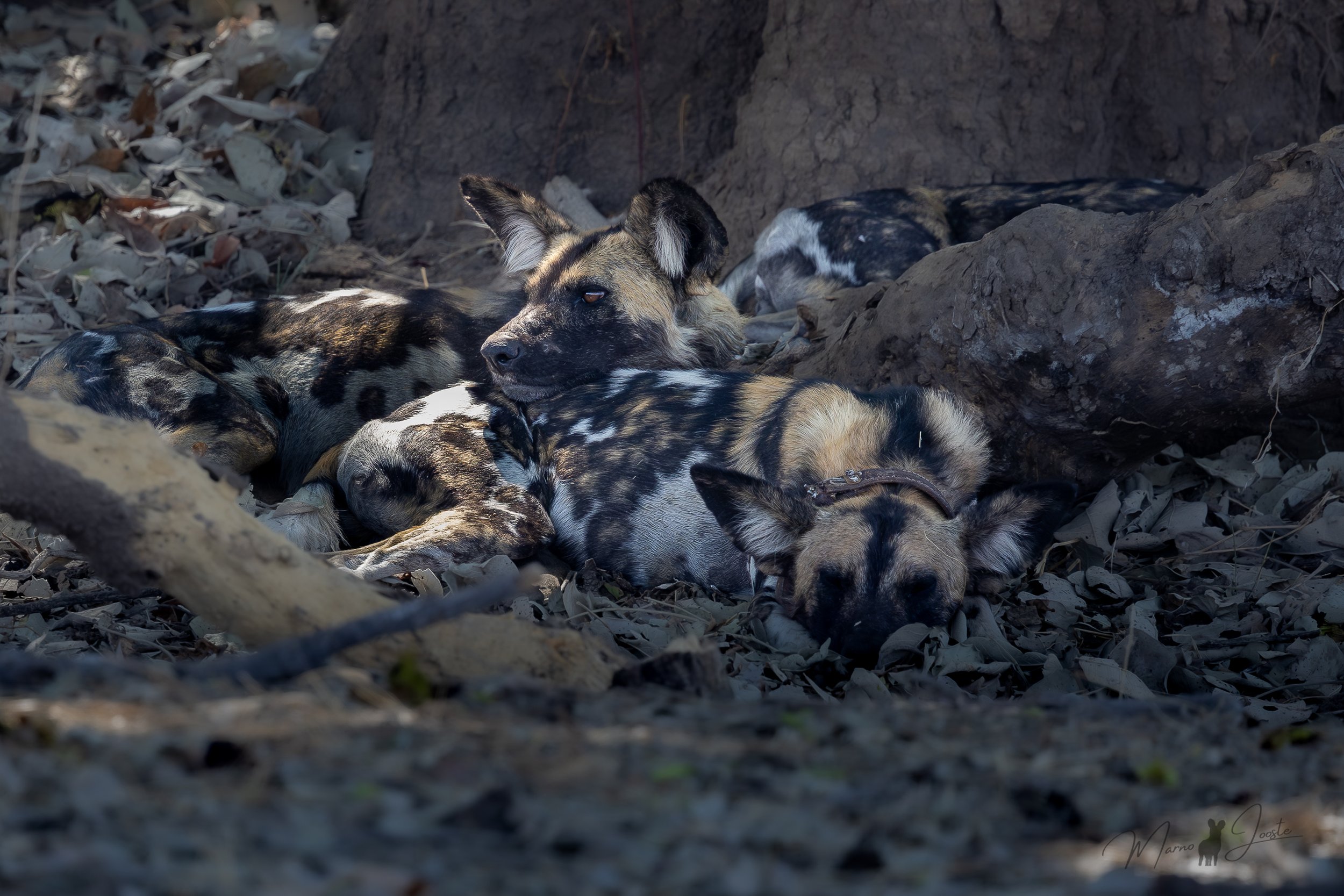
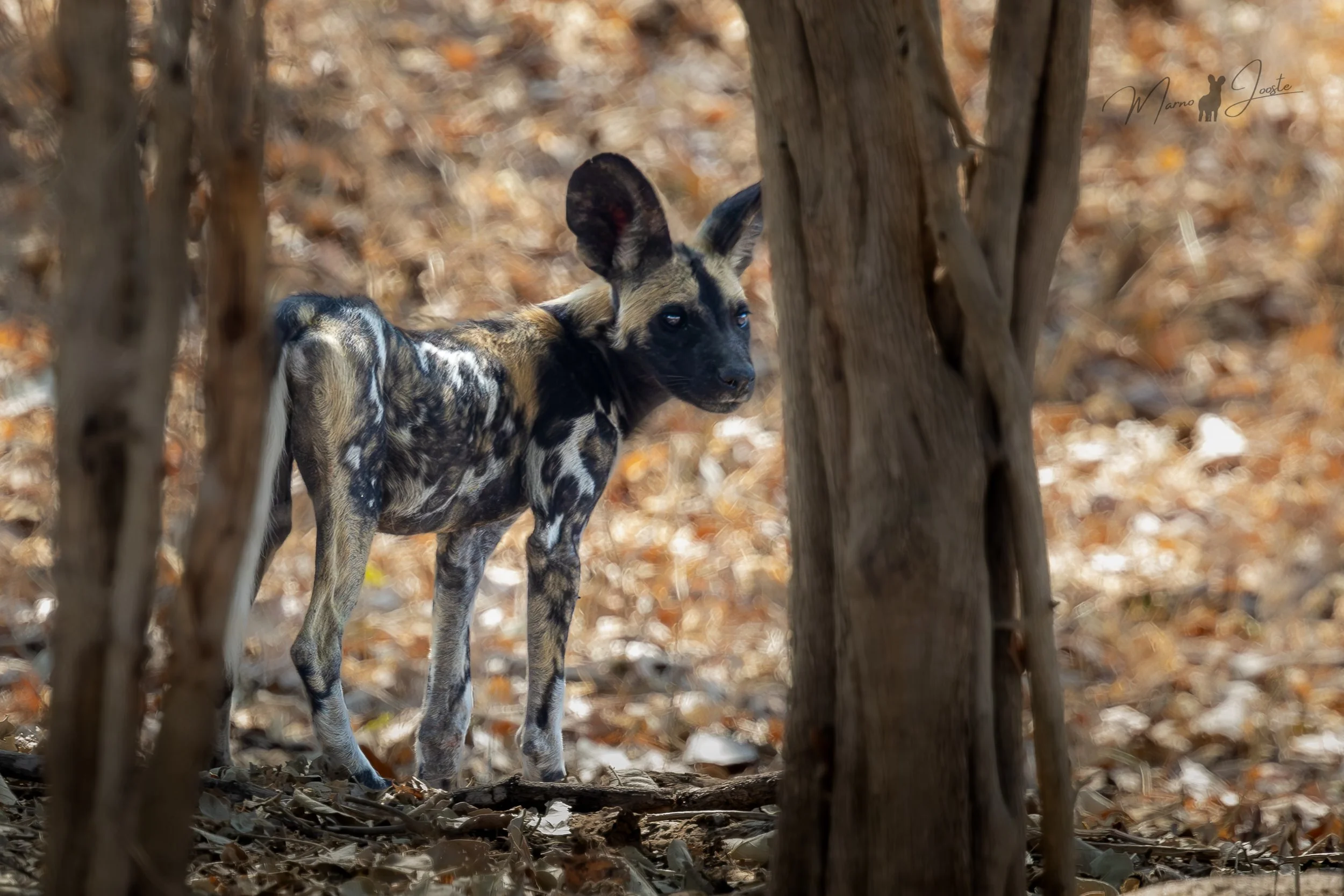
Just before reaching the main park entrance near Mfuwe, South Luangwa delivered one of the most anticipated sightings of the entire trip: African wild dogs. There are less than 7,000 African Wild Dogs (painted wolves) left in the world, which makes any sighting of these incredible predators, exceptionally special.
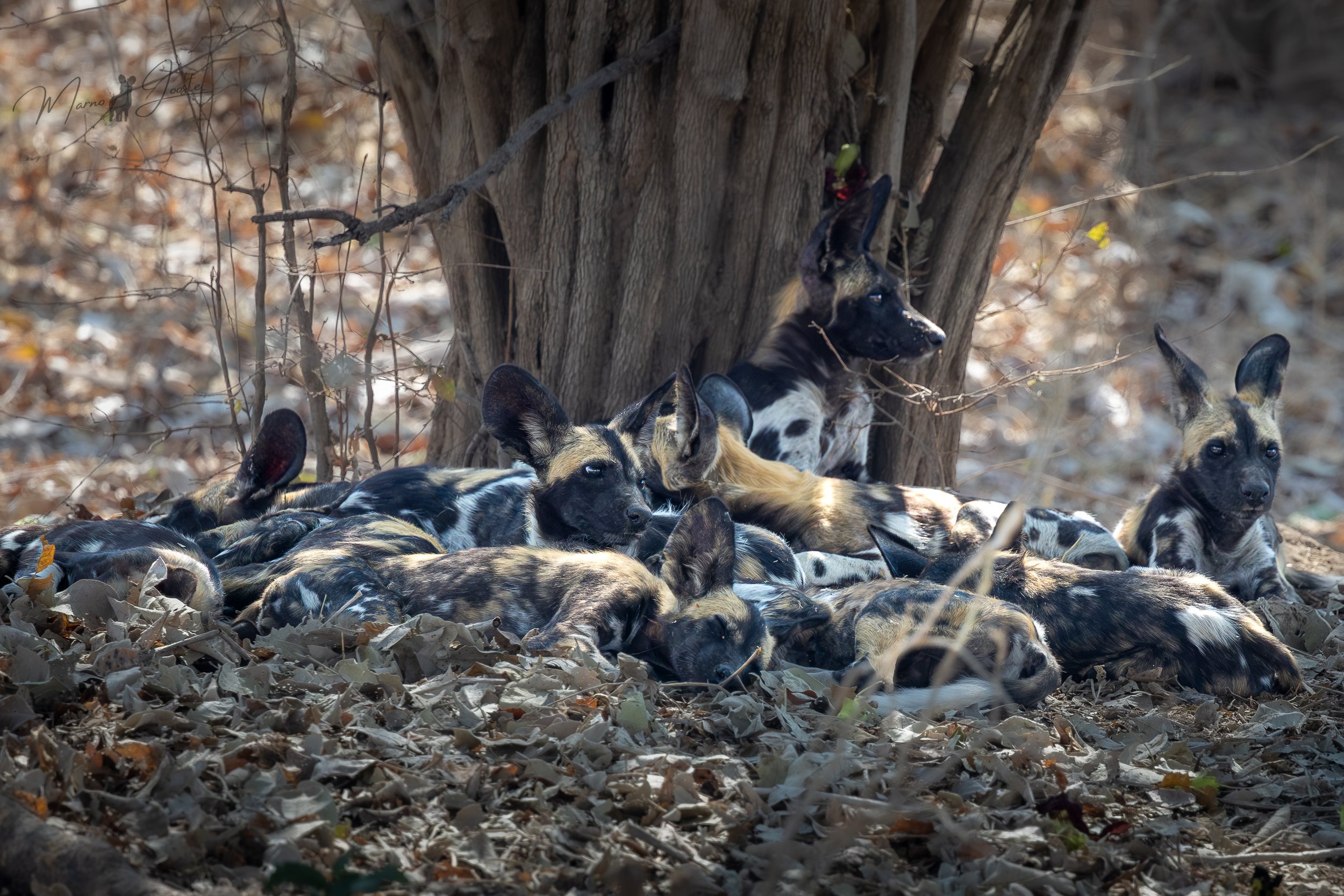
The pups in the pack all curled up together under a tree.
We found an entire pack resting in the shade, accompanied by ten pups, all clearly well-fed and relaxed after what must have been a successful morning hunt. There was little movement — just lazy stretches, yawns, and gentle jostling for the best sleeping positions — but the privilege of watching these endangered predators at rest was profound. Wild dog sightings are never guaranteed, and to encounter a full pack with pups felt like a gift from the valley. It truly was special to have been able to witness all of South Luangwa’s key predators within the first week of arriving in the park.
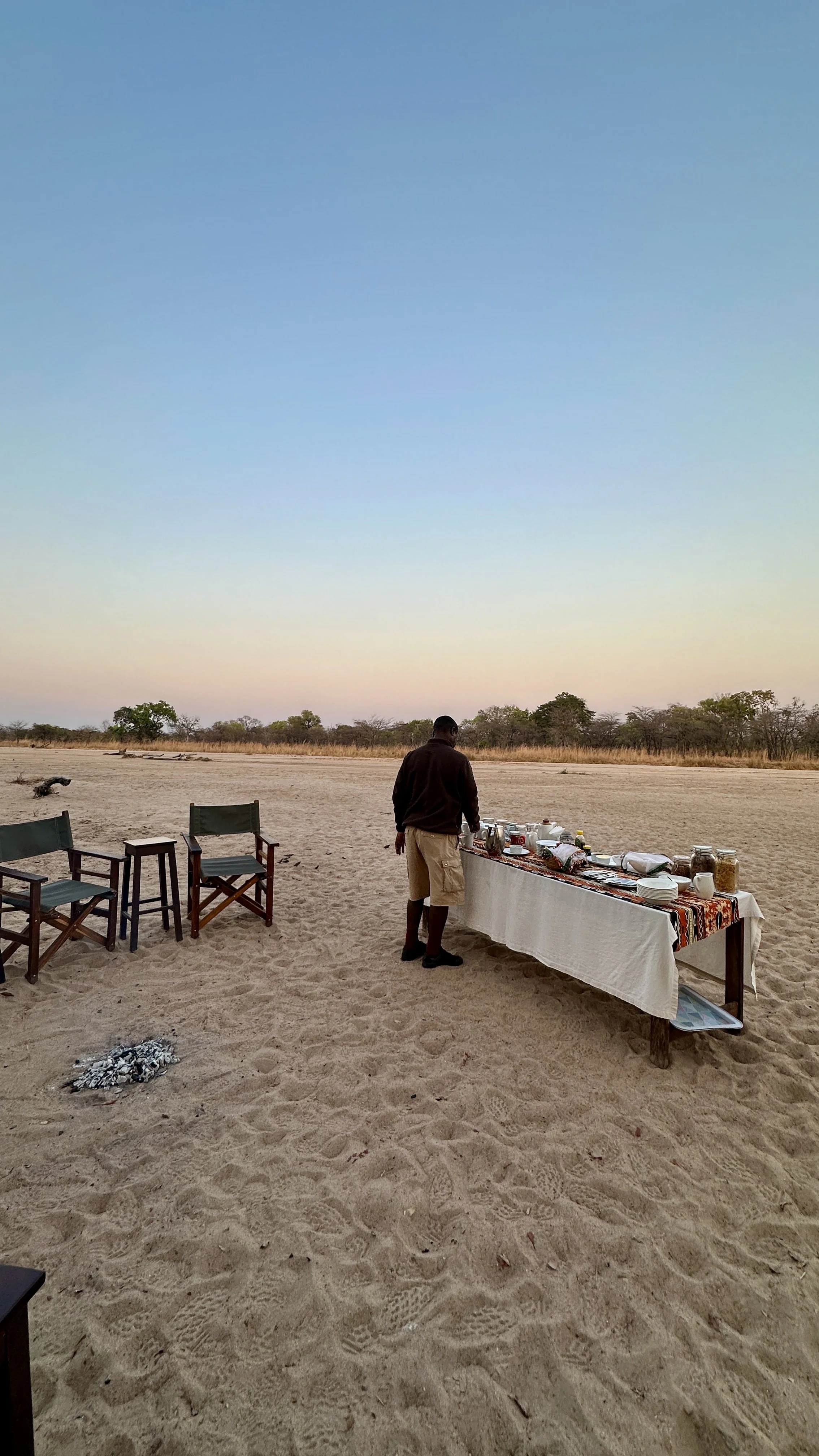
After a brief stop at Mfuwe Lodge for tea and coffee, we continued on to Nkonzi Camp, where the feeling of isolation was immediate and complete.
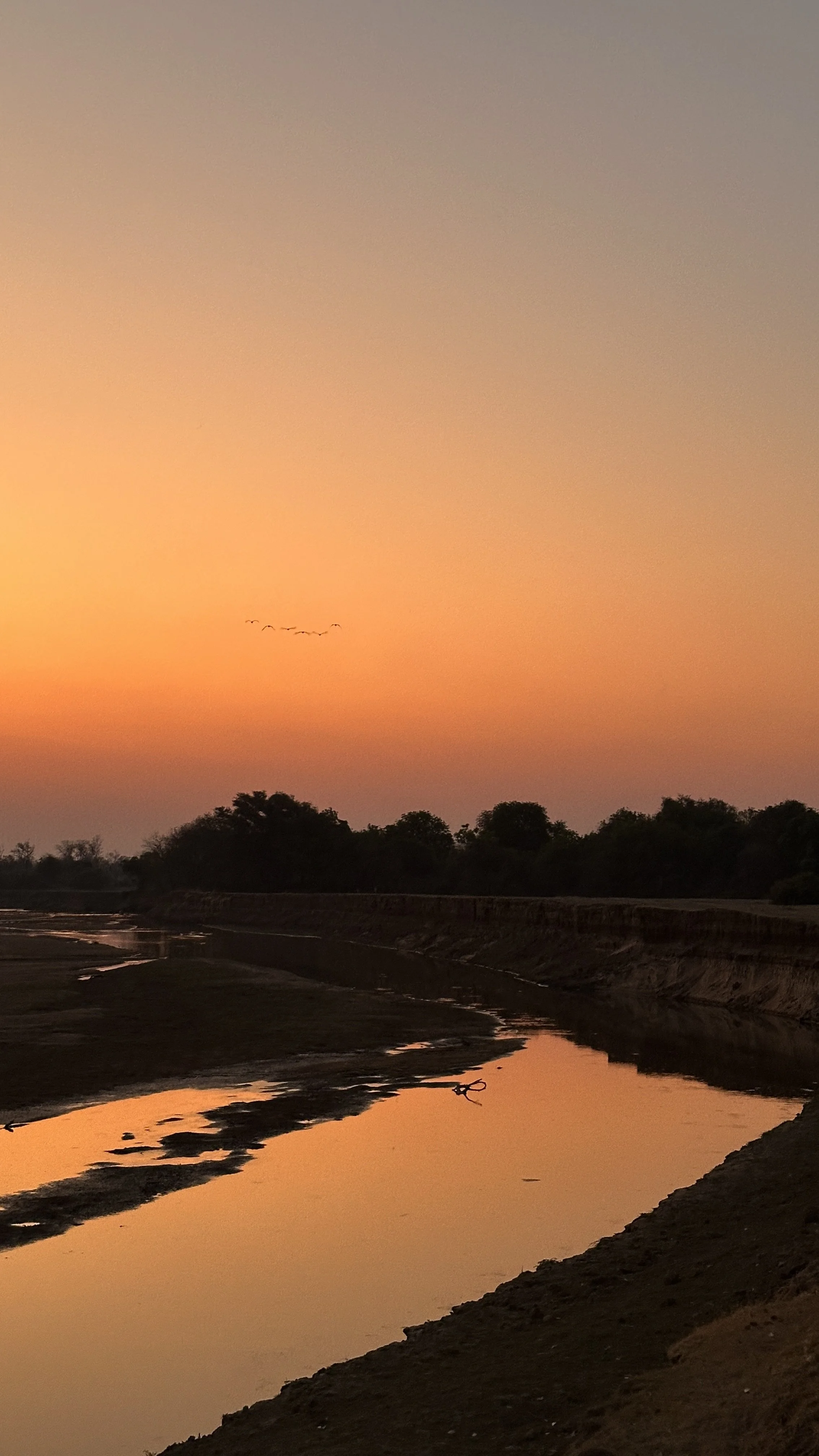
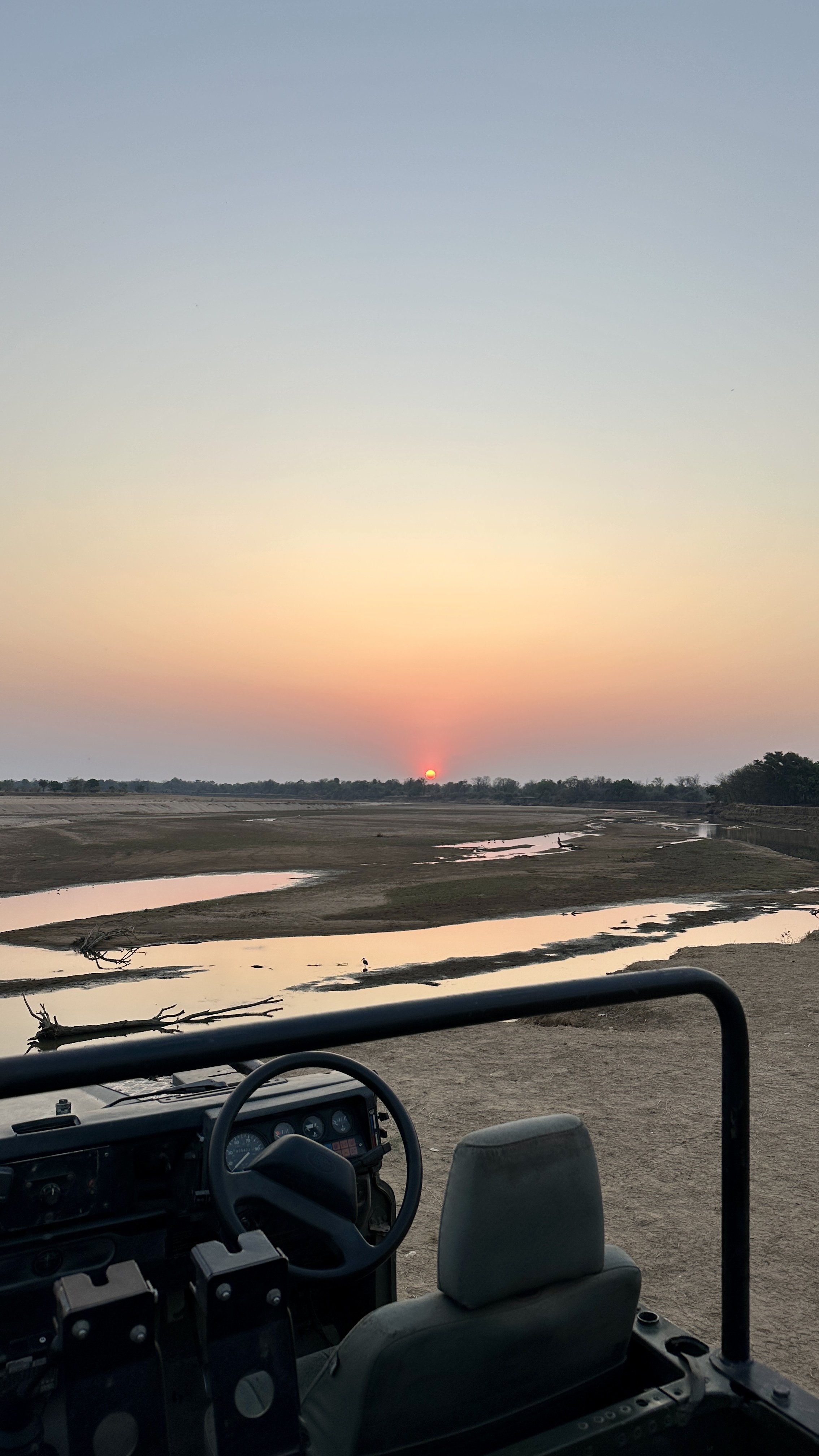
That afternoon’s drive introduced us to Nkonzi’s rhythm. Birdlife dominated the landscape, with new species constantly added to our growing list. Elephants moved quietly through the woodland, buffalo drifted past, and as the sun sank toward the horizon we arrived at the Luangwa River for sundowners.
It was one of the most beautiful sunsets of the trip. Right at the water’s edge we watched pied kingfishers, malachite kingfishers, green-backed herons, and the unmistakable African skimmer, all against a backdrop of snorting hippos and a glowing river. Gin and tonics in hand, the moment felt timeless.
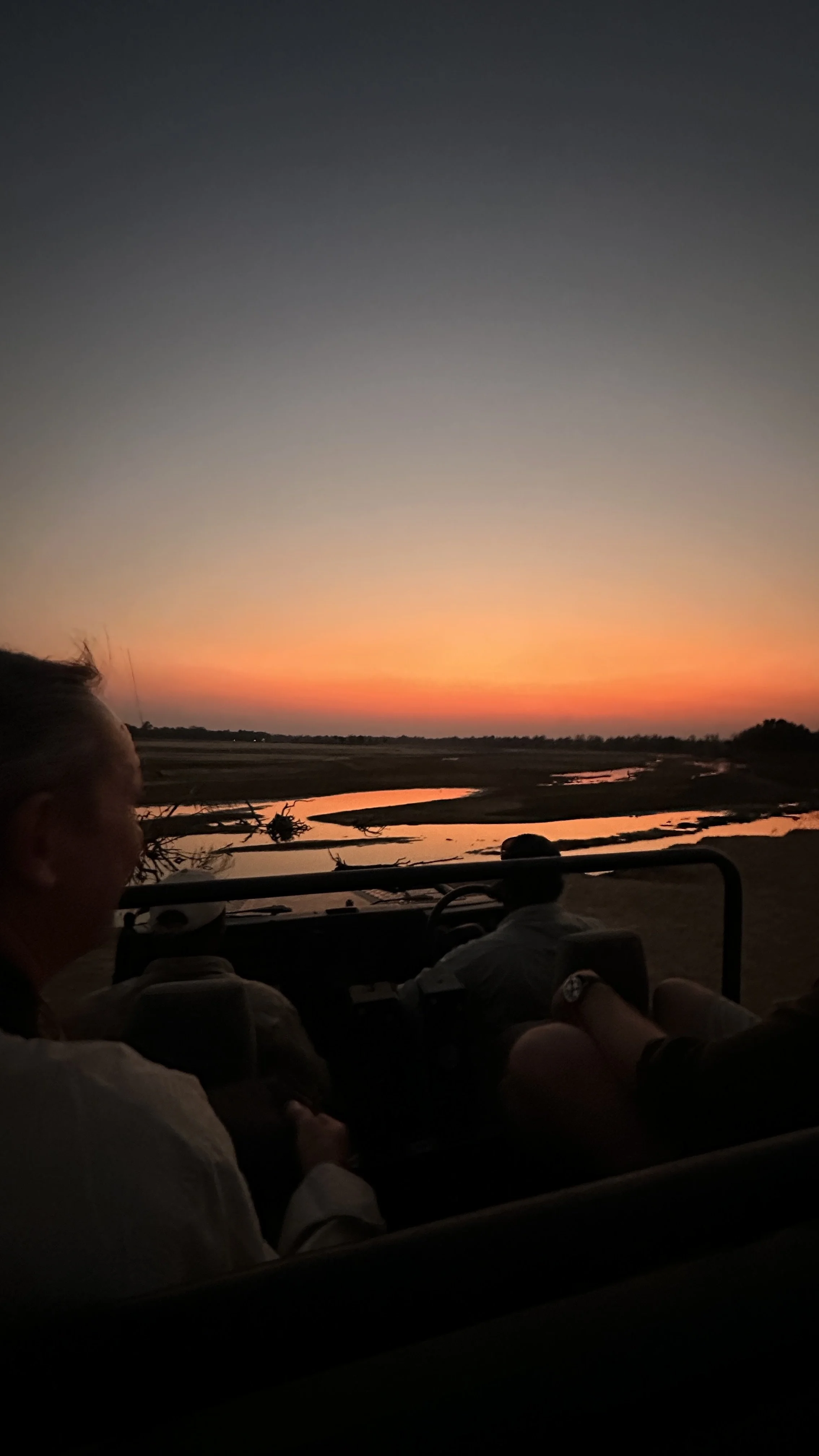
The night drive delivered another highlight — an african civet, one of Africa’s most elusive nocturnal mammals, moving calmly through the darkness. African civets will eat rodents, insects, reptiles, eggs, carrion, and a surprising amount of fruit, which makes them important seed dispersers in some habitats.
Day 7 – Walking the Small Stories of the Bush
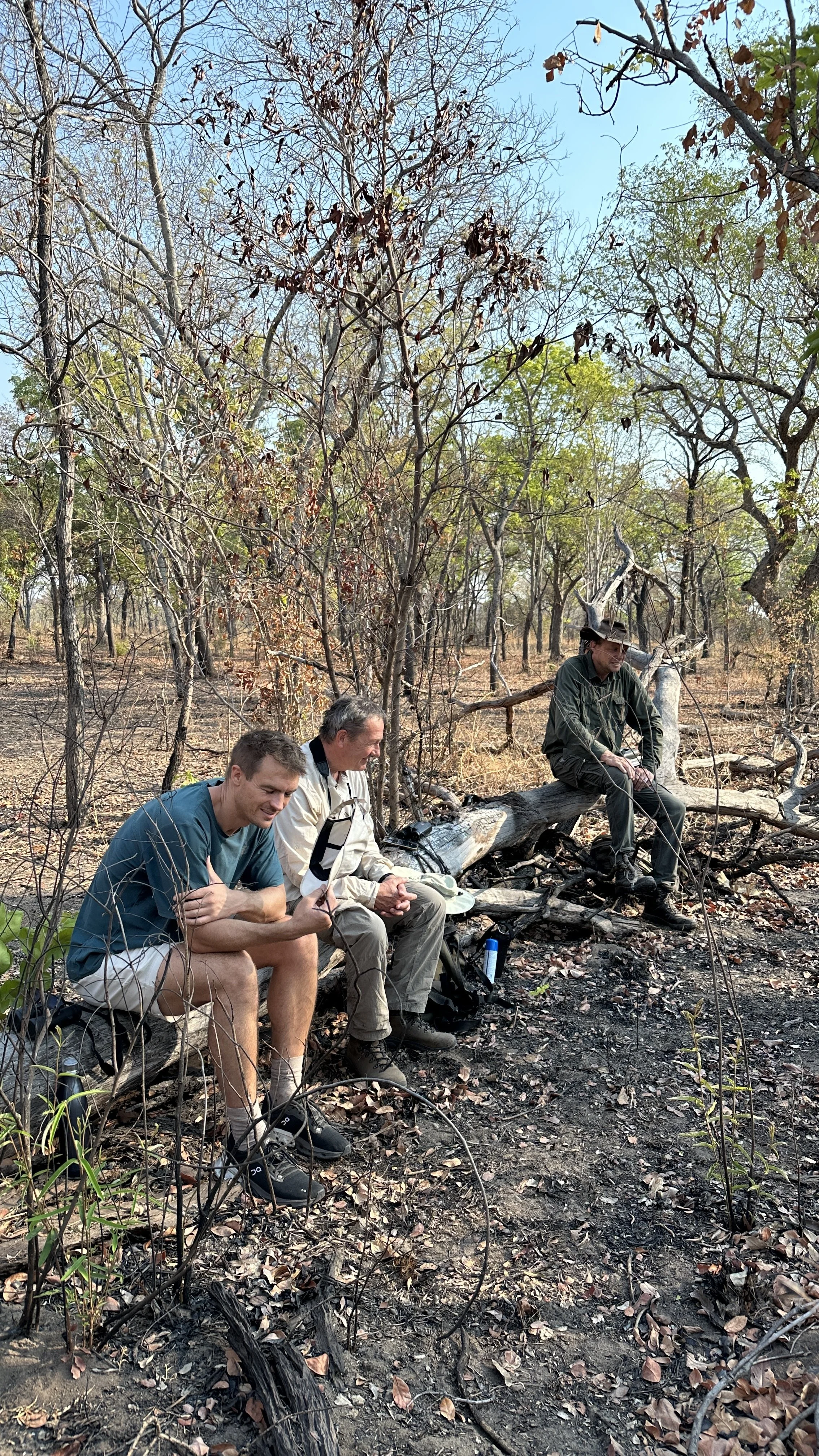
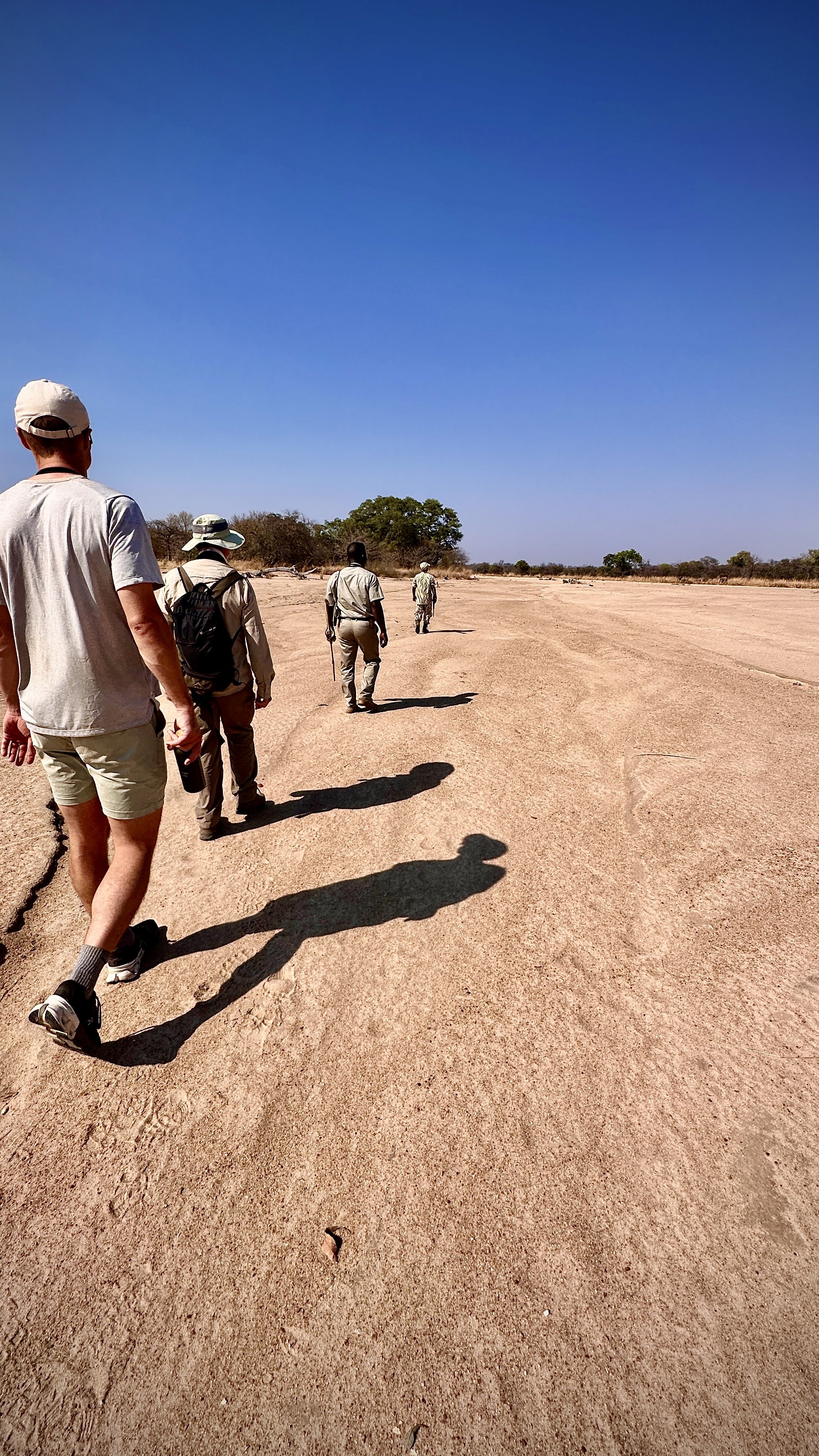
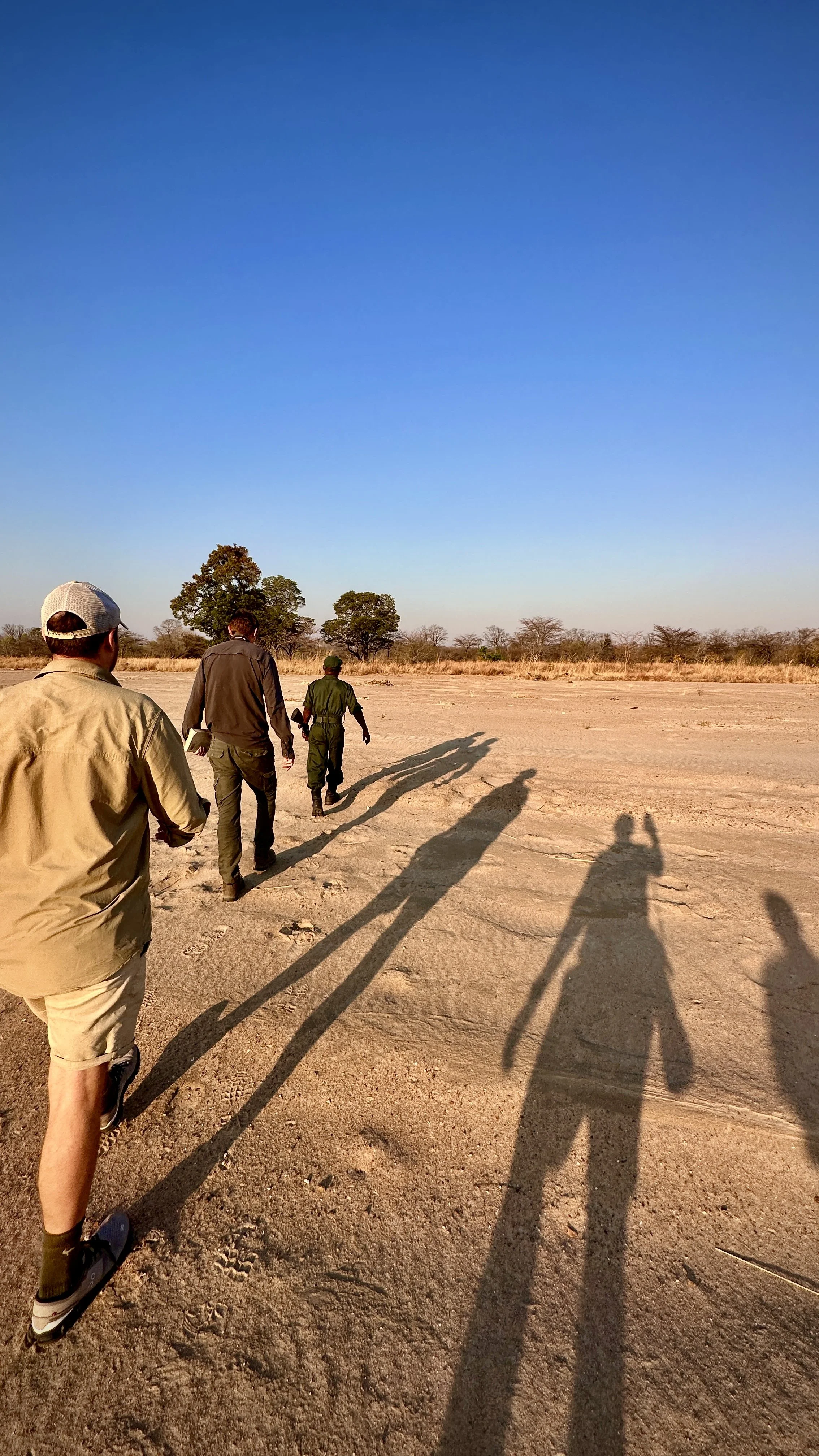
The following morning we set out on foot with our guide Jabes, supported by spotters Dixon and Peter. As always, walking revealed a different layer of the ecosystem — one defined by detail.
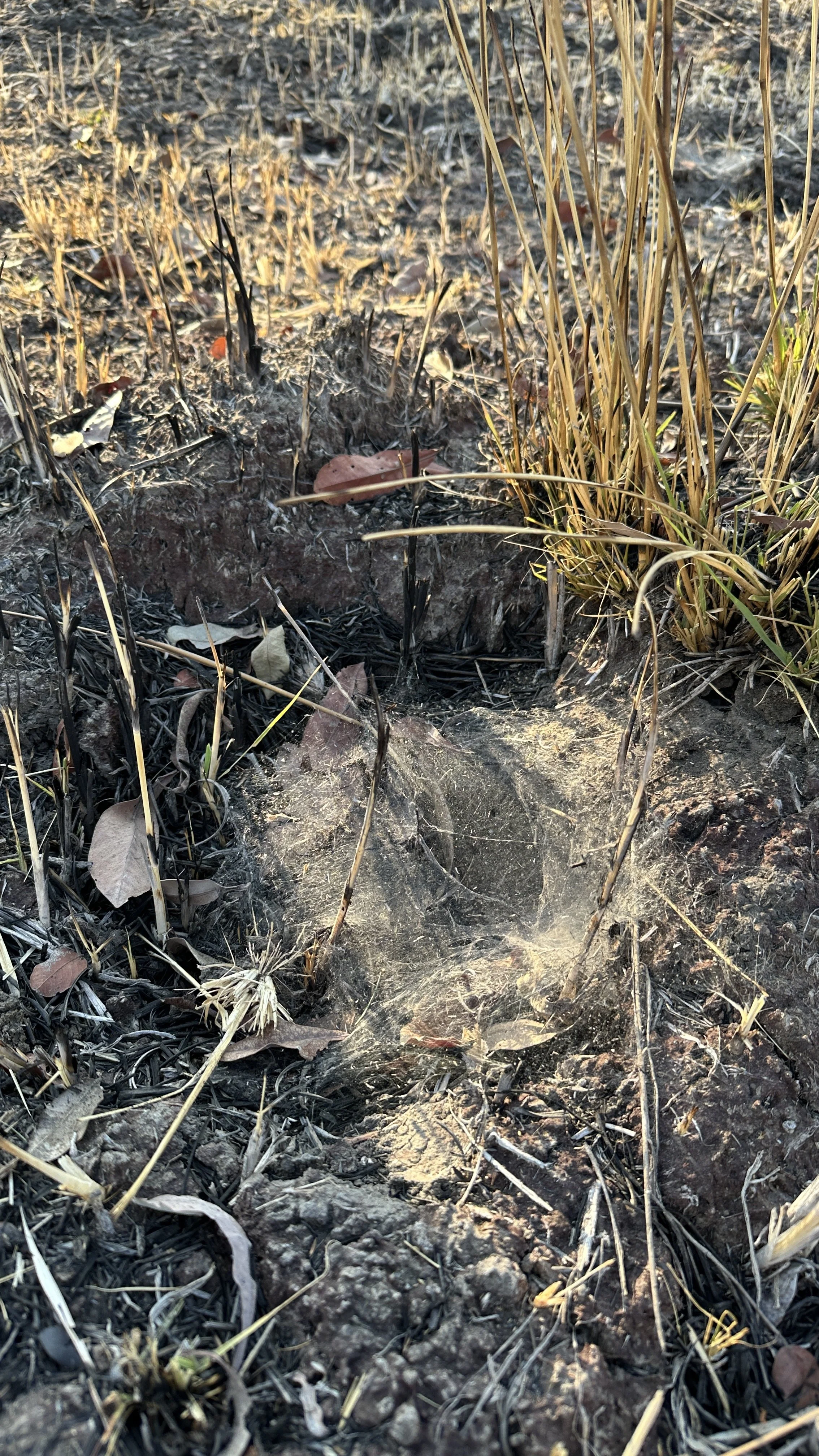
We examined elephant dung and discussed how to distinguish males from females by the position of urine, inspected a funnel-web spider’s nest to see whether the occupant was home, and identified porcupine, impala, bush pig and zebra droppings along the way. Fresh aardvark diggings, likely from the previous night, were among the most exciting finds — powerful evidence of how much happens while we sleep.
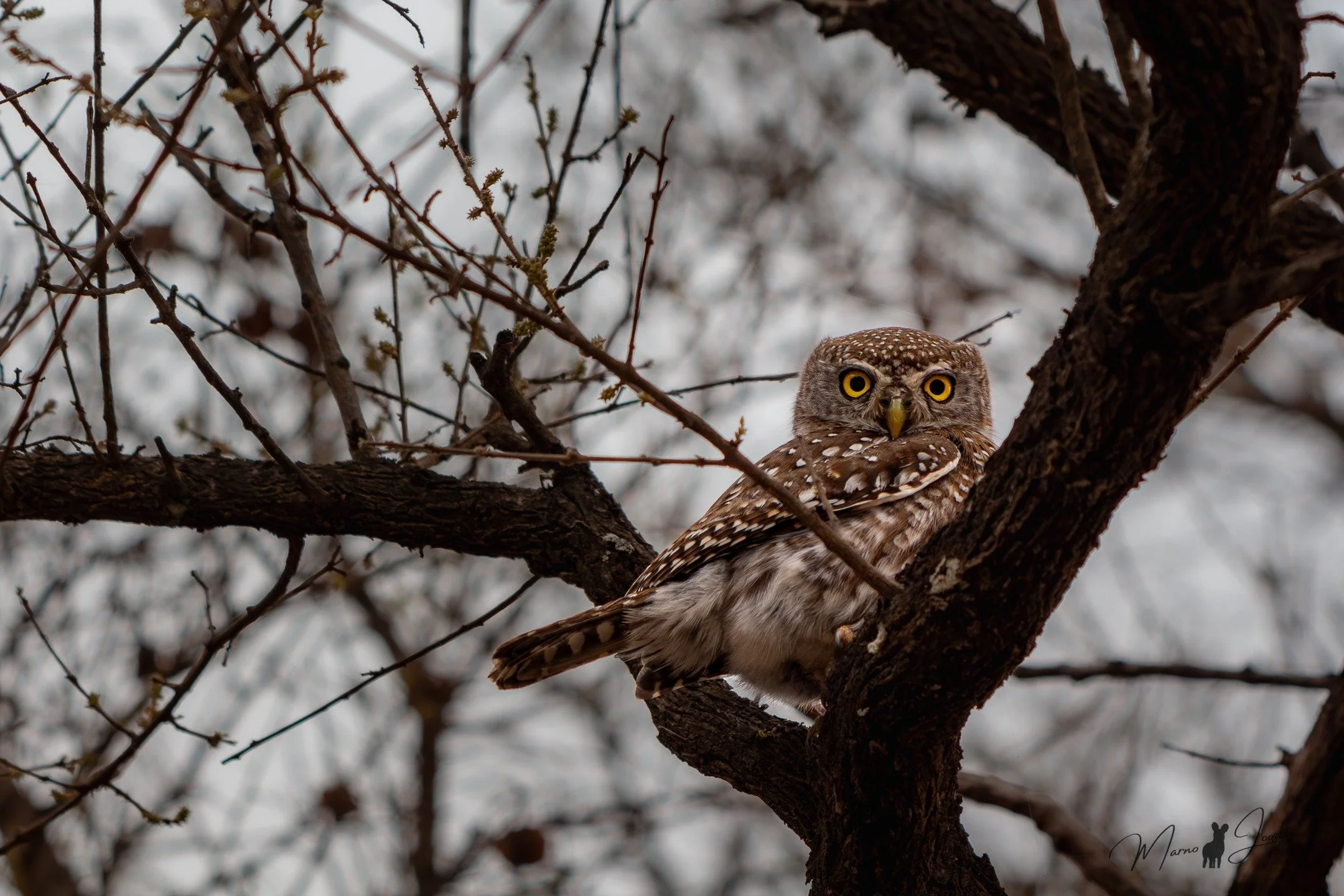
Tree squirrels barked warnings from above, and birdlife accompanied us throughout the walk. The standout of the morning was a dark chanting goshawk, while other subtle discoveries included an African barred owlet feather, warthogs staring us down at a waterhole, and elephants quietly drinking near camp.
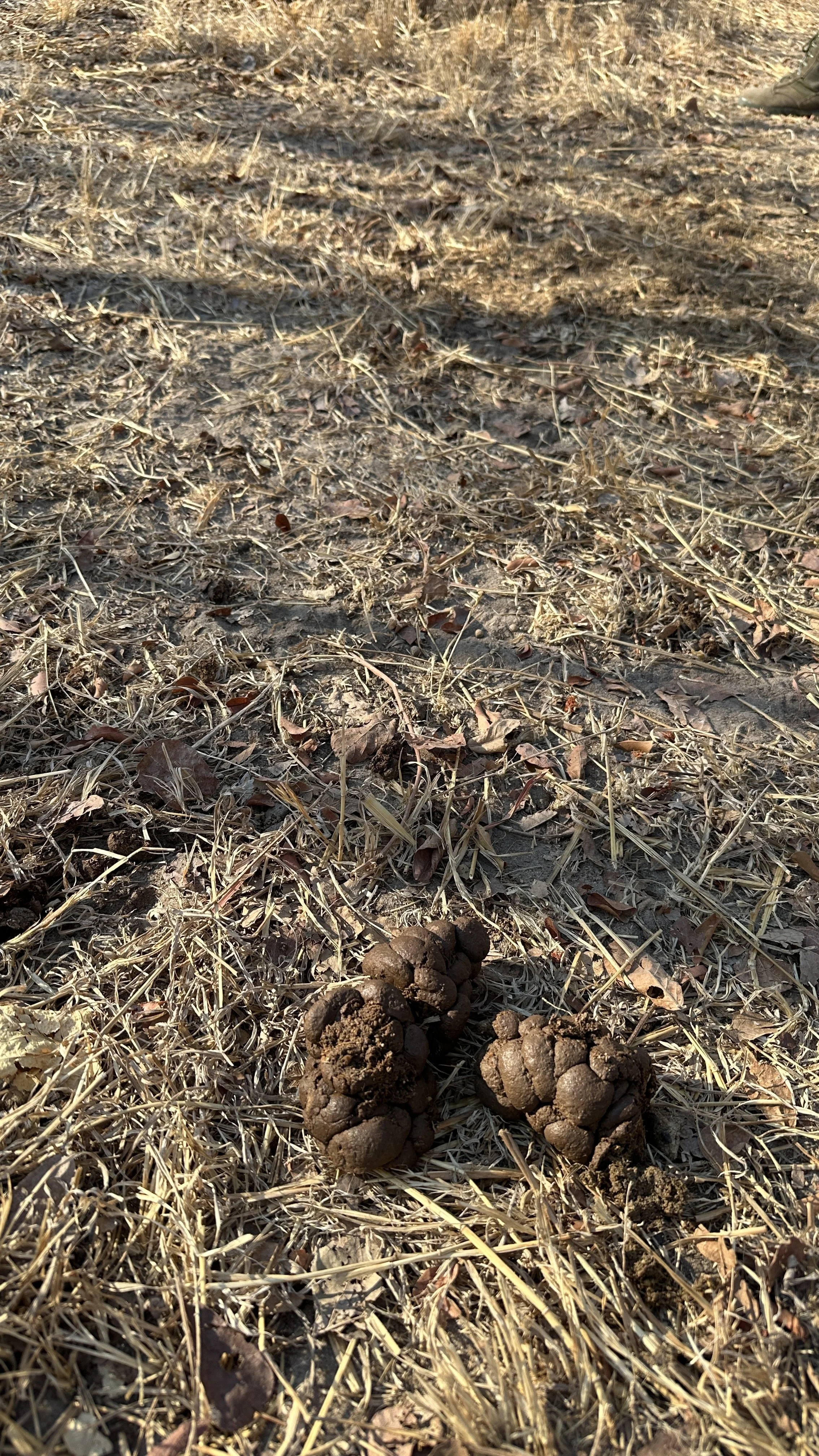
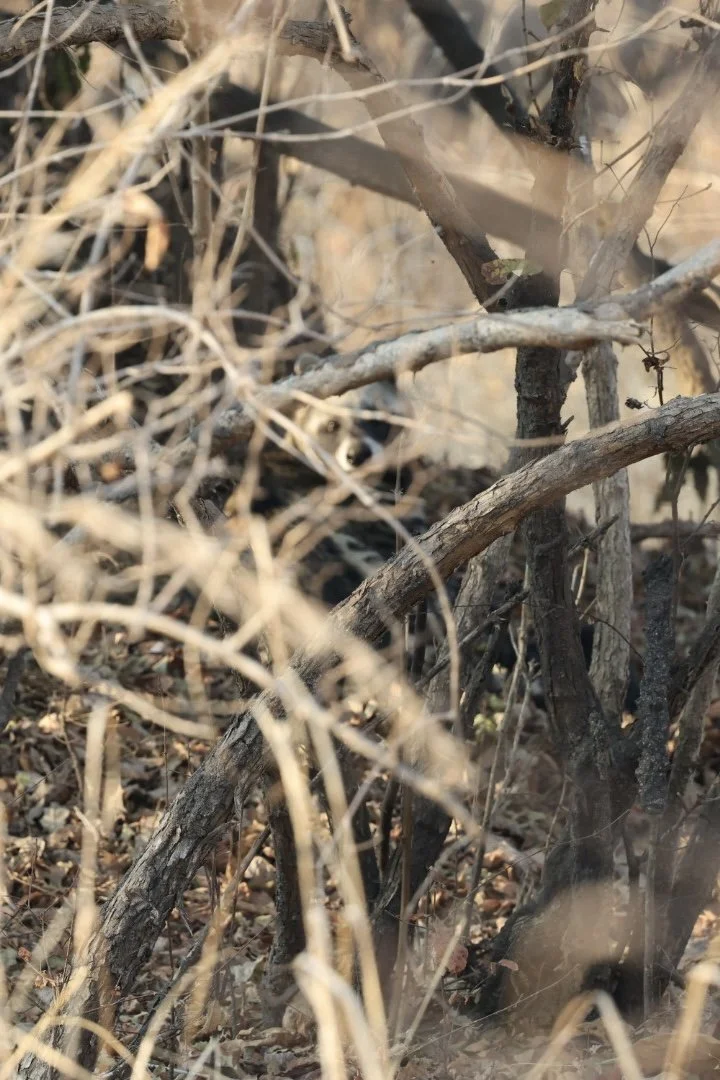
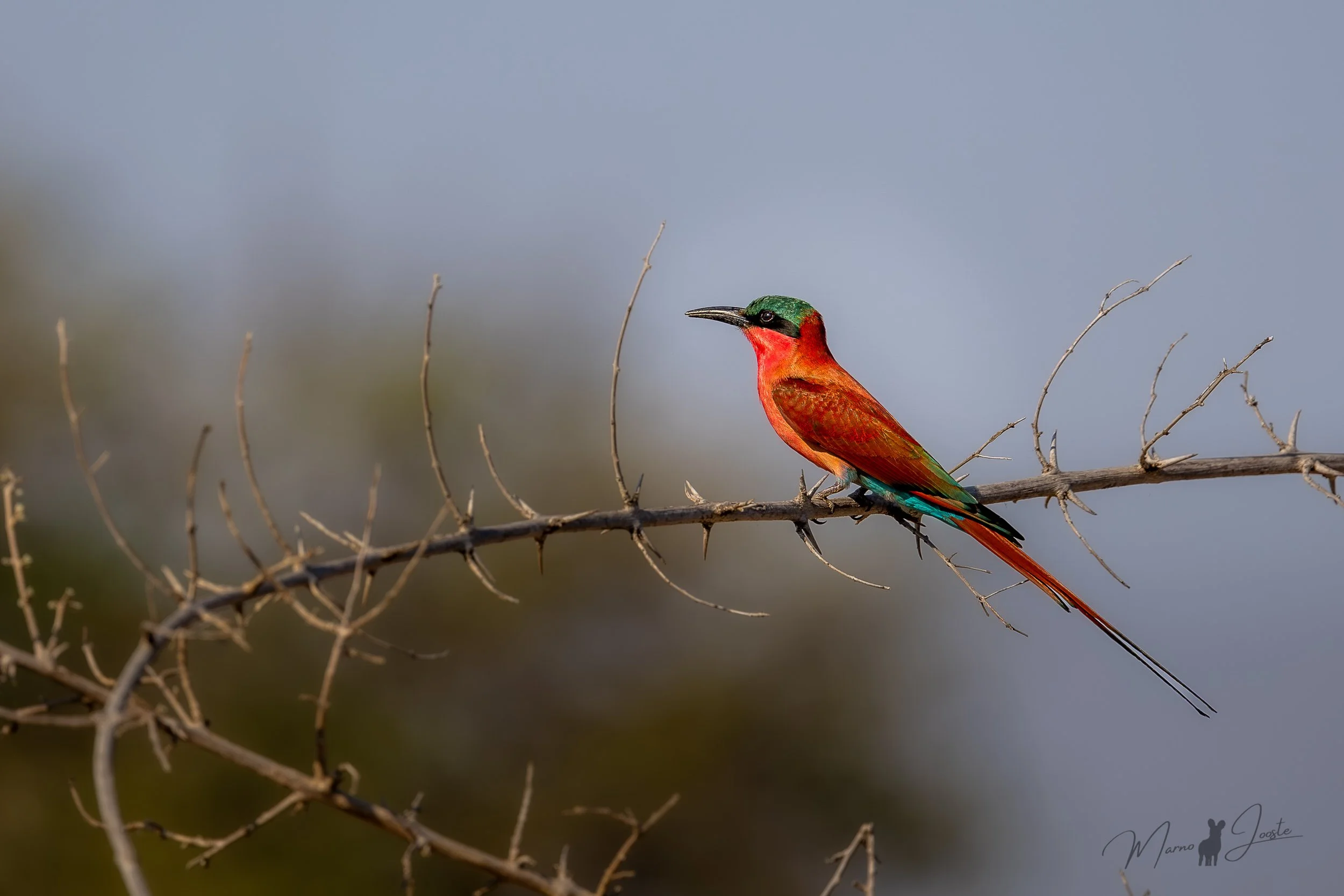
The afternoon drive was quieter in terms of mammals, but the day finished beautifully with sundowners at a southern carmine bee-eater nesting colony, the air alive with colour and movement.
That night’s drive, however, was nothing short of exceptional — one of the best nocturnal drives of the trip. We encountered multiple genets, another civet, spotted hyena, African scops owl, Verreaux’s eagle-owl, and an African barred owlet — a rare and memorable concentration of elusive night species.
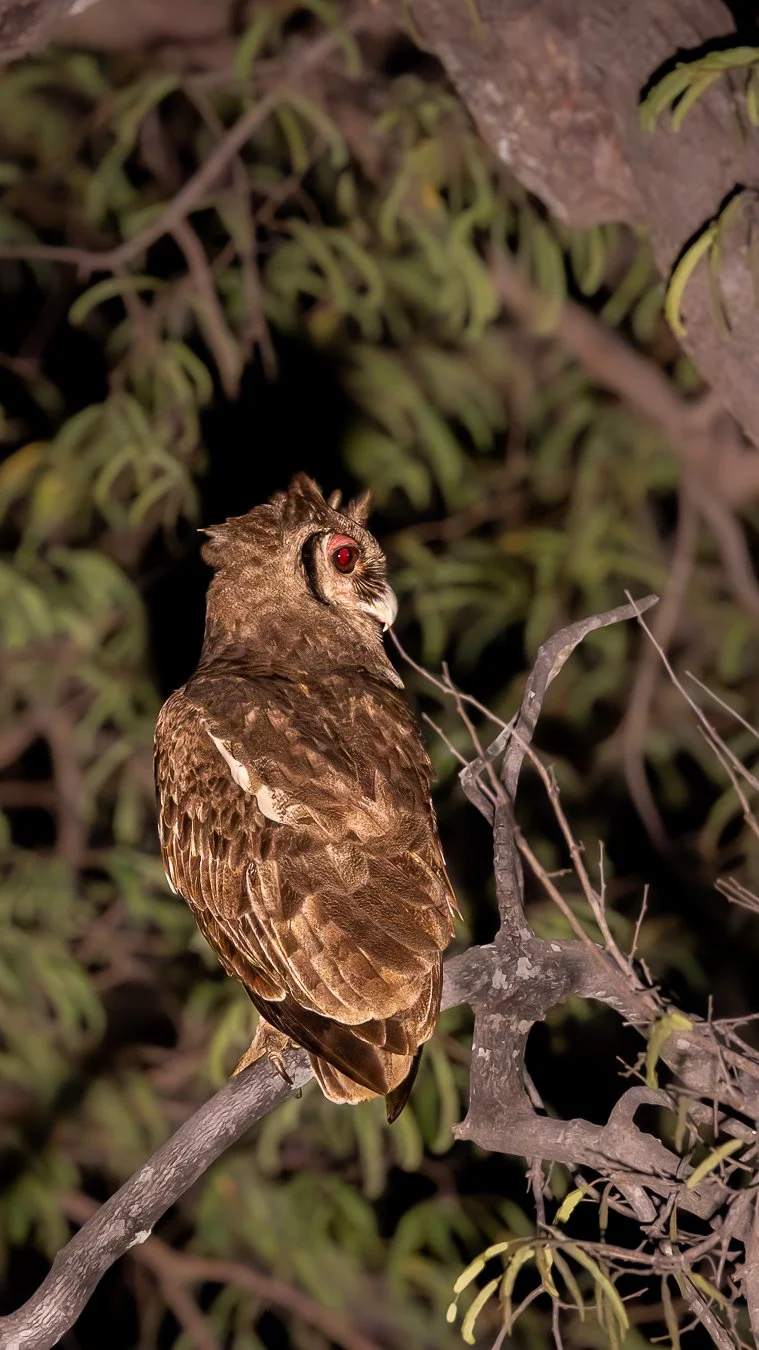
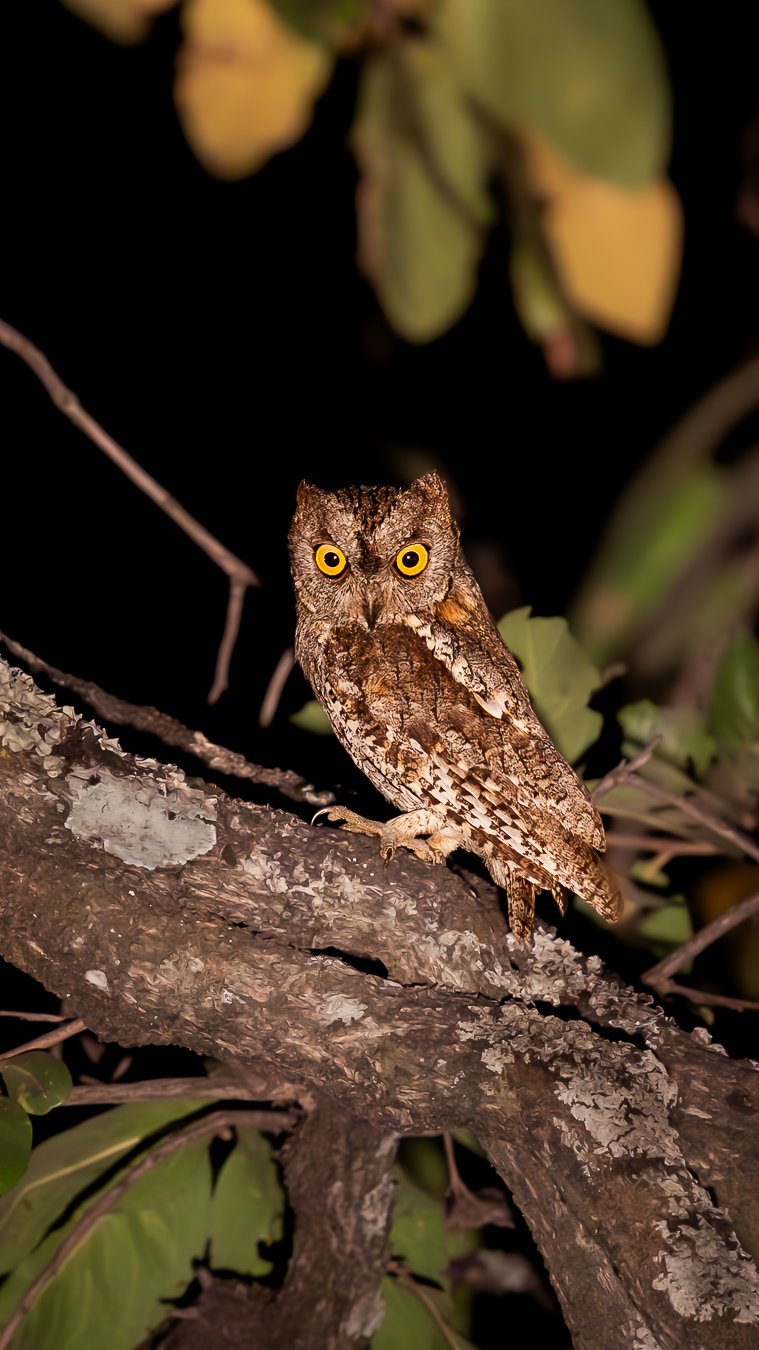
Day 8 – Quiet Bush & Campfire Traditions
Day eight unfolded gently. A morning walk with Gavin Opie himself revealed fresh leopard tracks and guinea fowl feathers from a recent kill, but the bush remained hushed — a reminder that not every day in the wild needs to deliver spectacle to be meaningful.
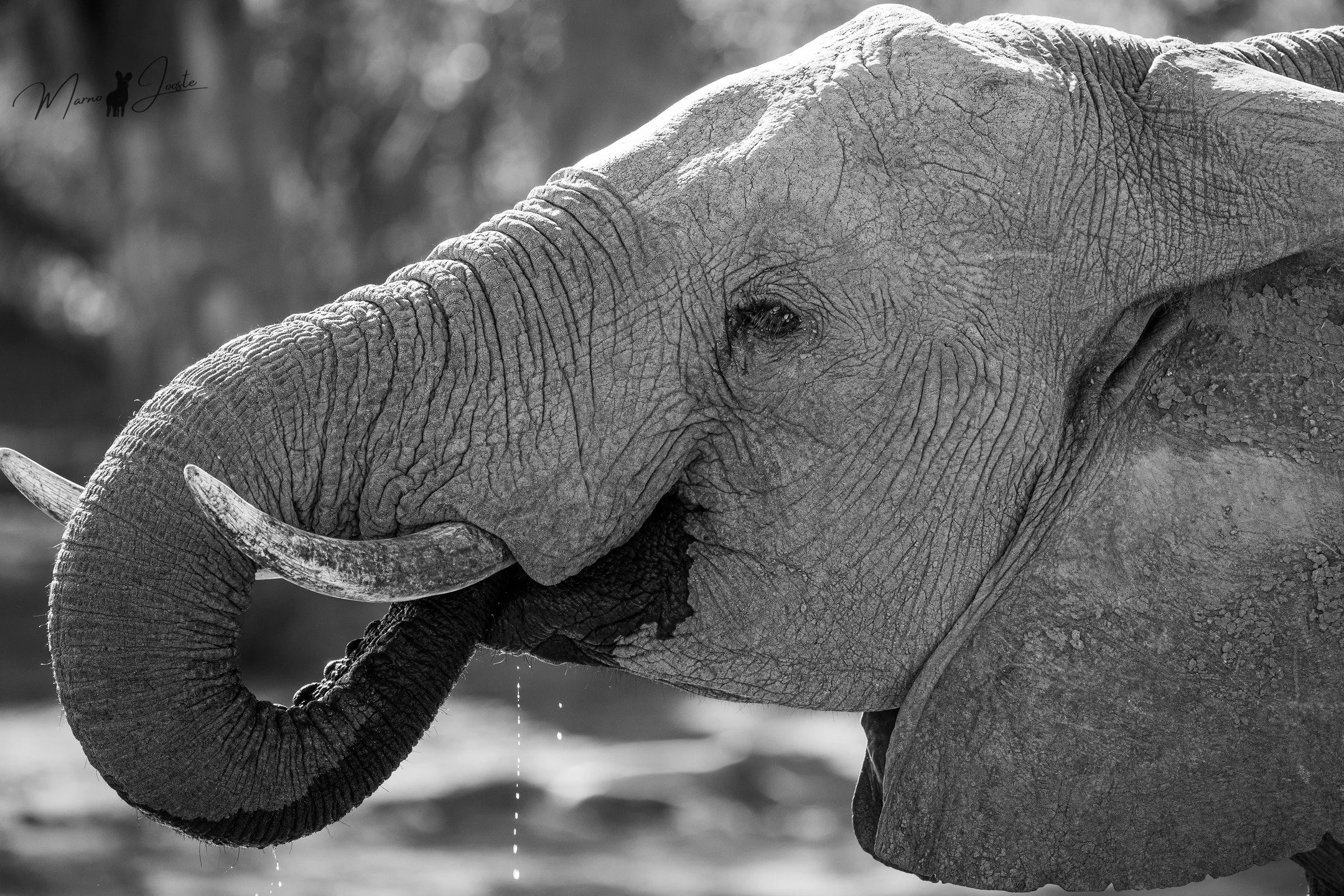
The afternoon drive was similarly calm, highlighted by elephants at a waterhole, including several very young calves — always a joy to observe.
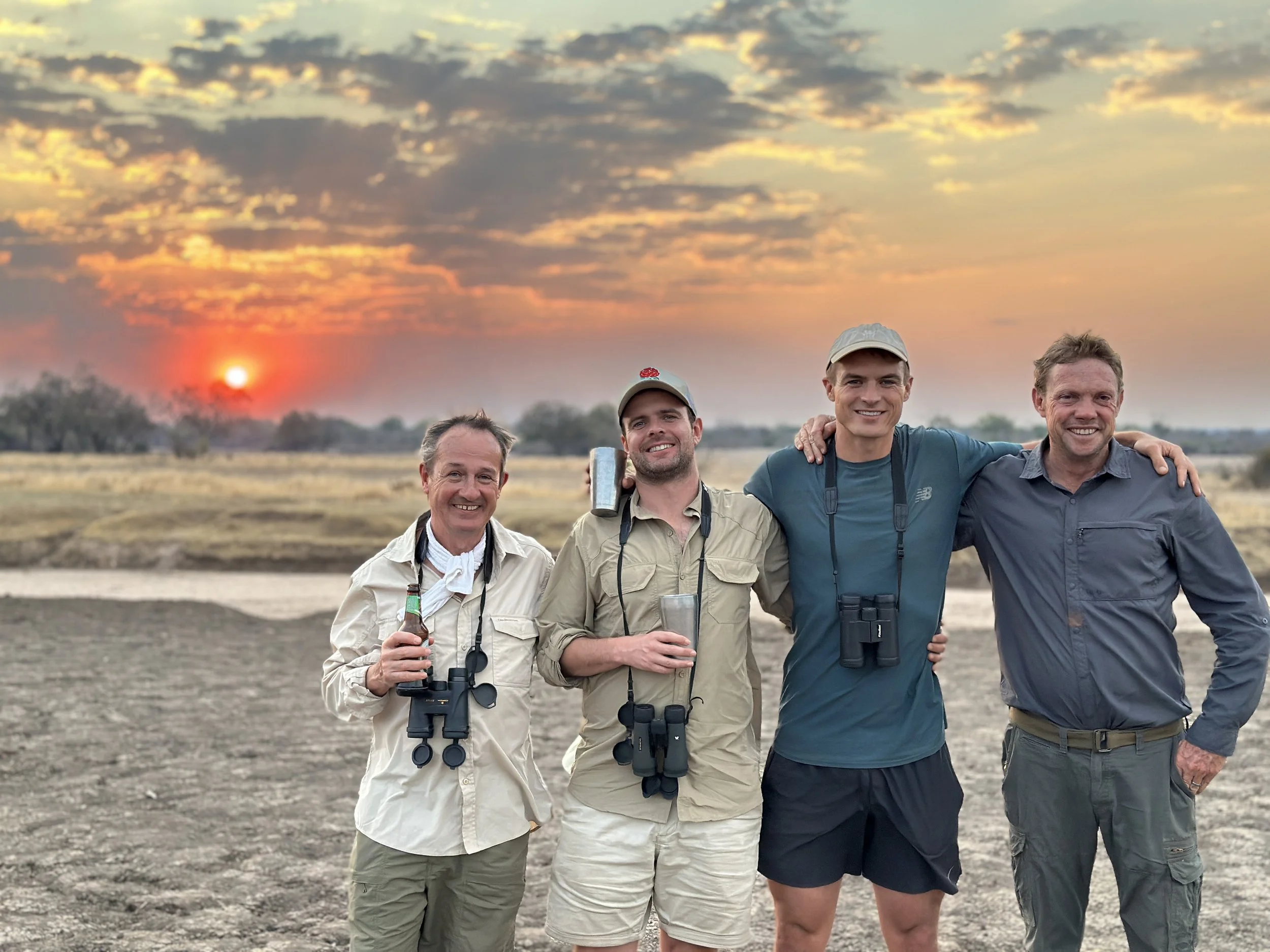
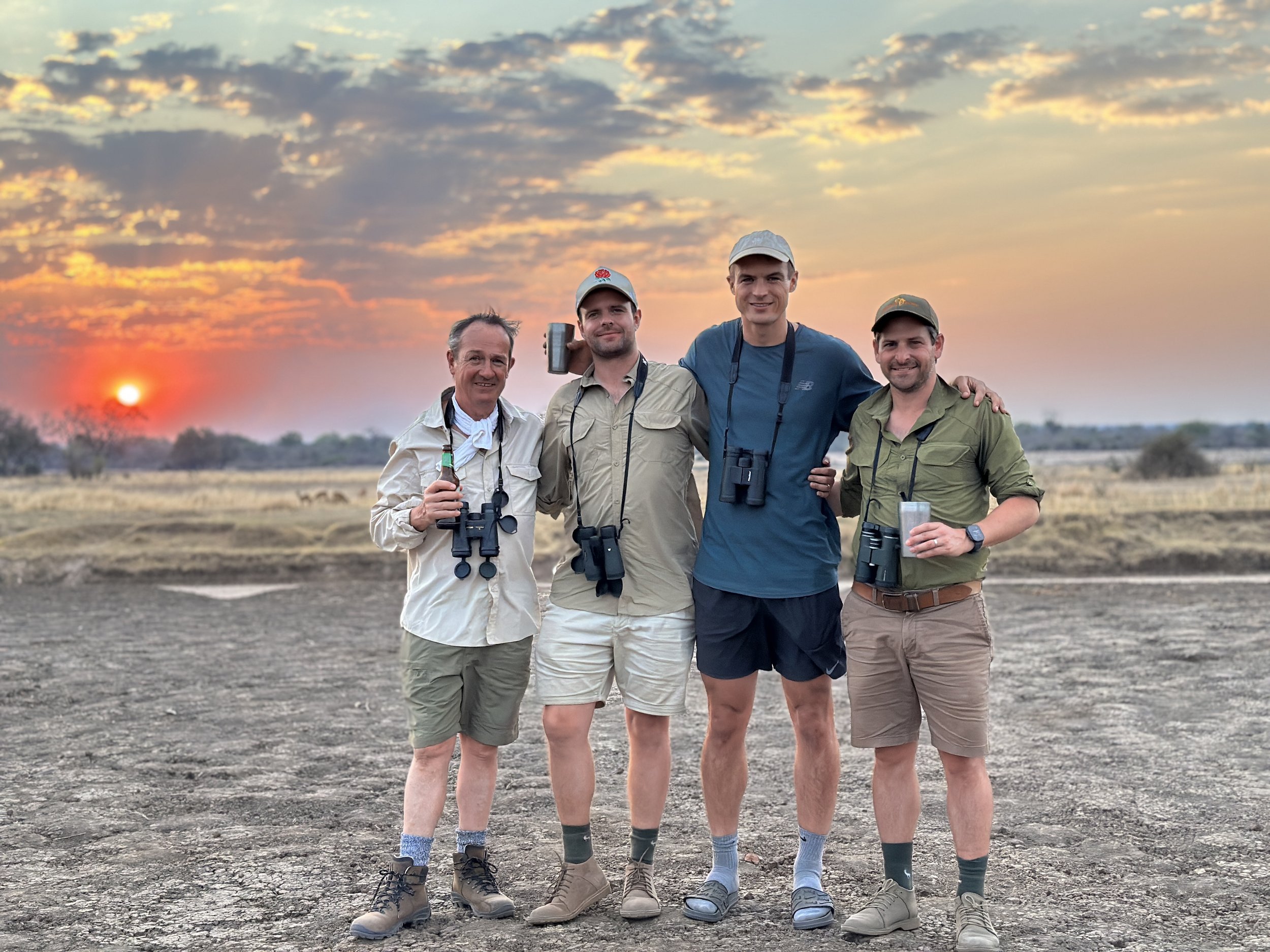
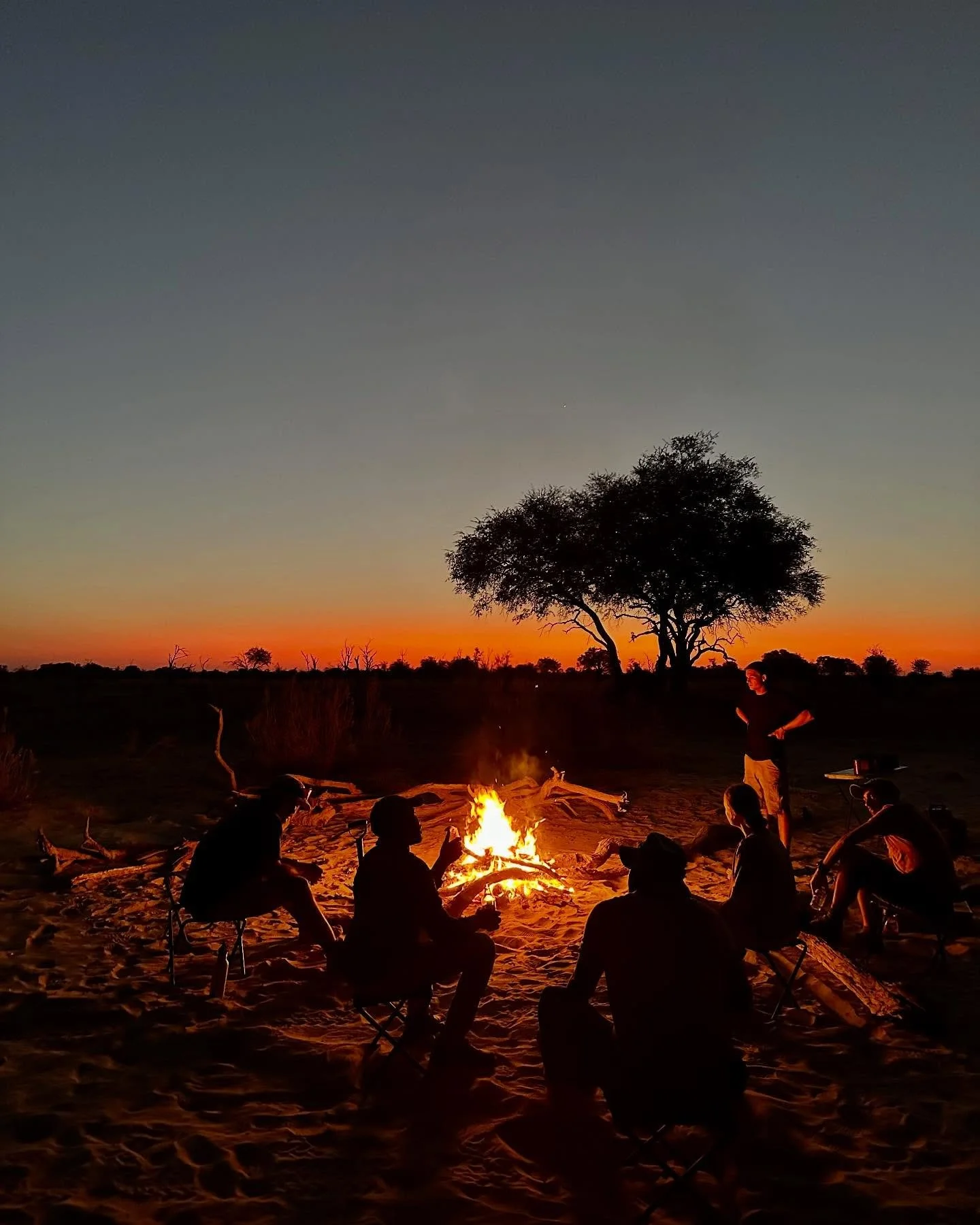
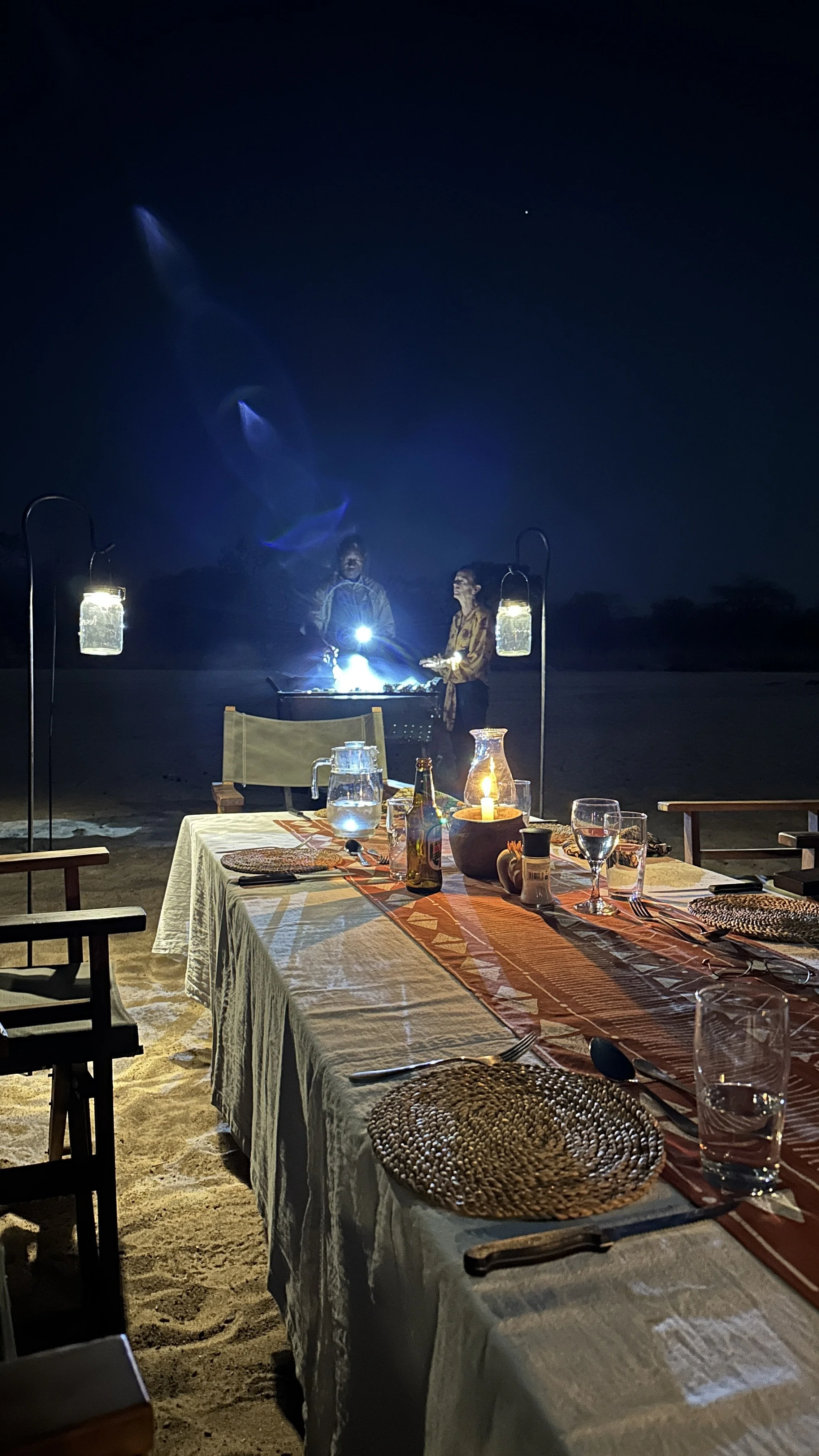
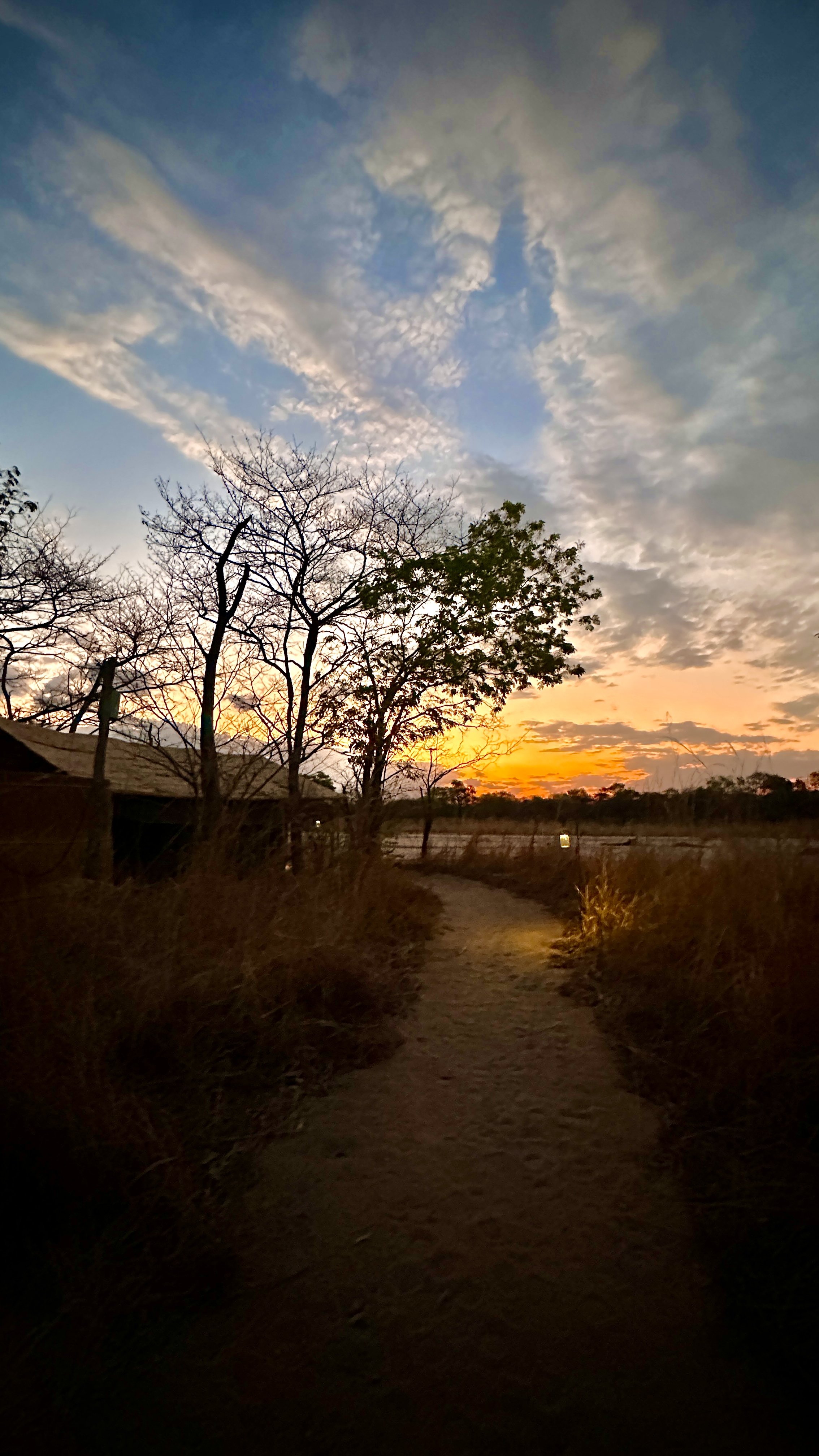
That evening, we gathered for a traditional South African braai, dining under the stars in a dry riverbed. Firelight, good food, and shared stories brought the day to a close in classic safari style.
Day 9 – Leopards, Lions & the Long Road North
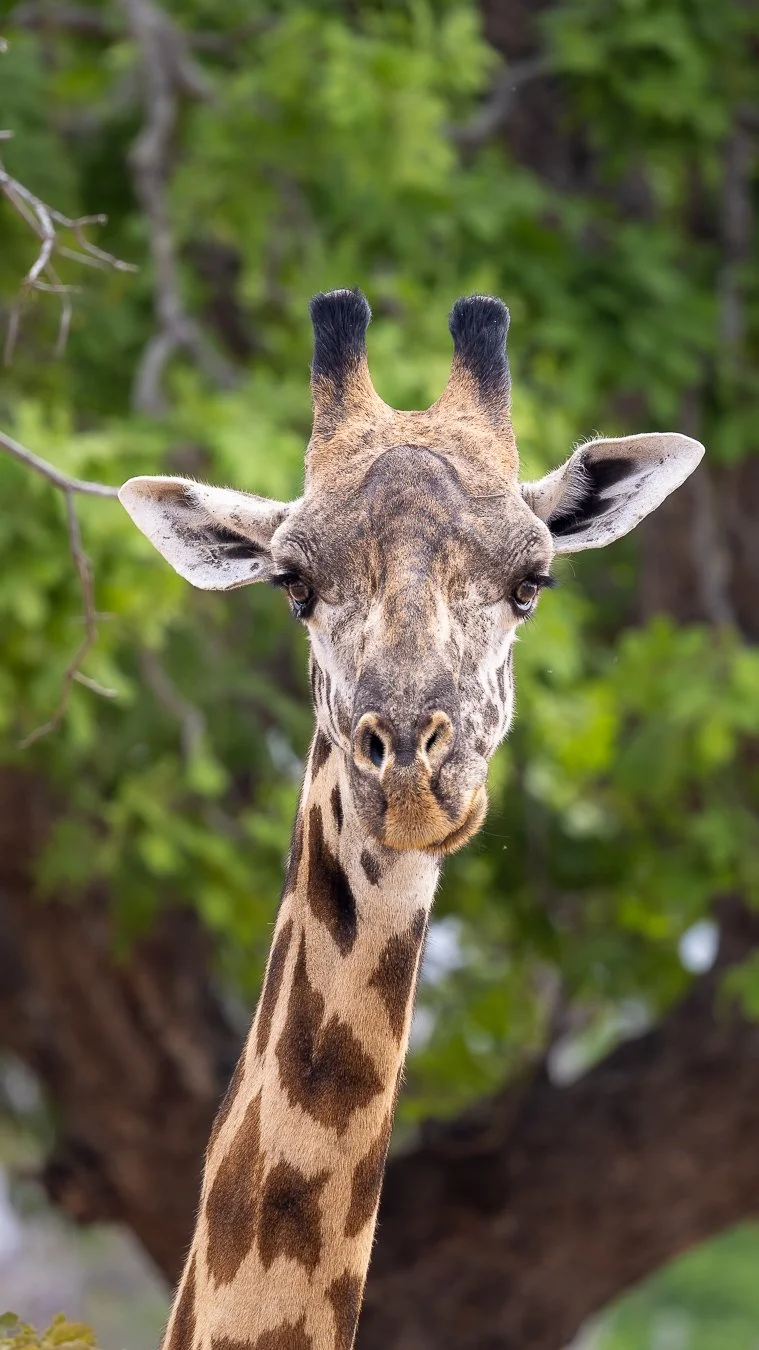
Day nine was our most ambitious — a full-day journey deep into the north eastern reaches of the park, toward the Nsefu area where the famous BBC Documentary called “Kingdoms” was filmed. This area was the territory of the famous Leopardess, Olimba, now a celebrity star on many nature documentaries. The drive produced a steady stream of quality sightings: crowned eagle on its nest, African harrier-hawk, giraffe, impala, buffalo, and hyena.
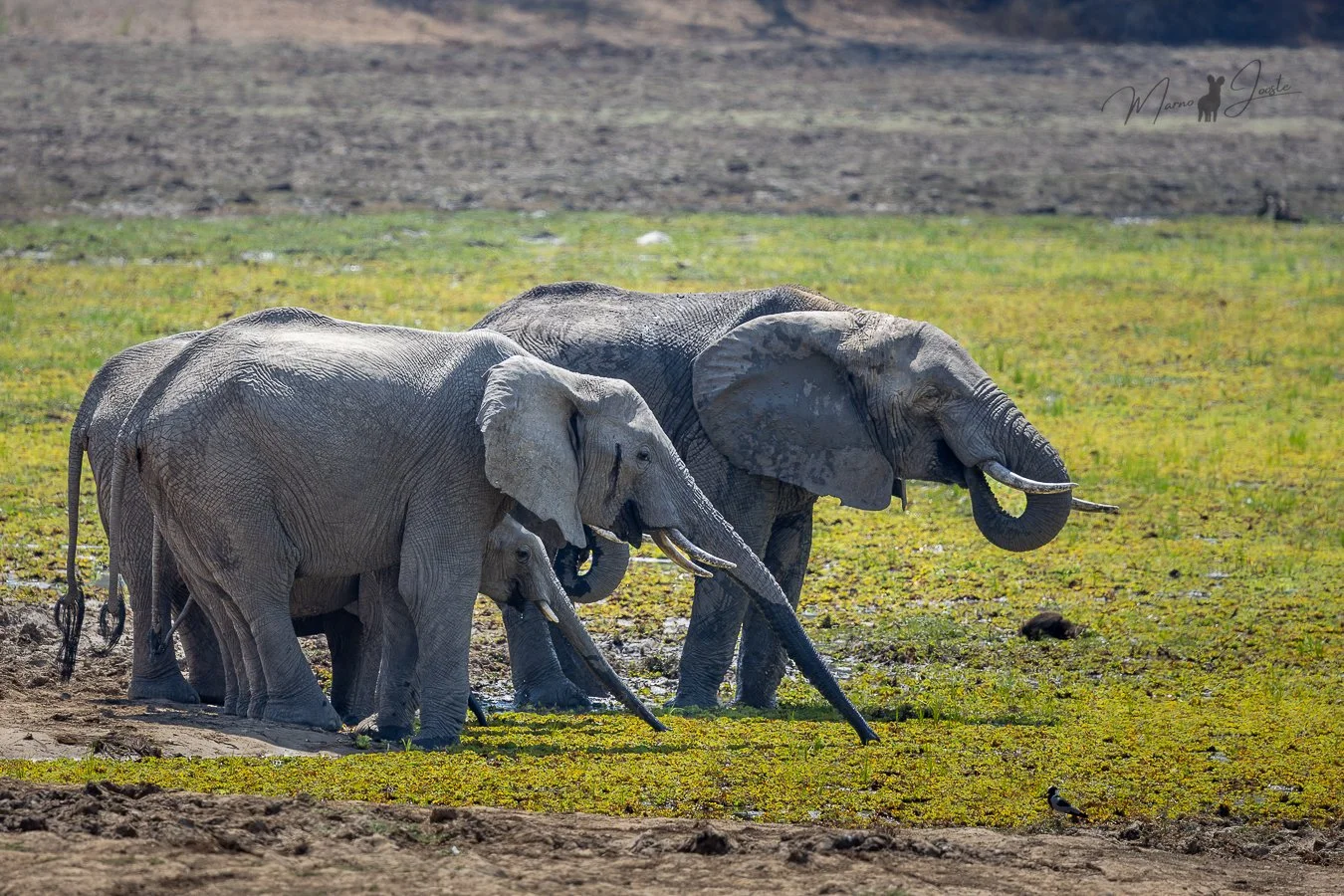
The morning highlight came during our tea break beside a lagoon, where a large herd of elephants fed peacefully, surrounded by vibrant birdlife. Further north, marabou storks and eagles lined the riverbanks, and a monitor lizard was spotted improbably high in a tree.
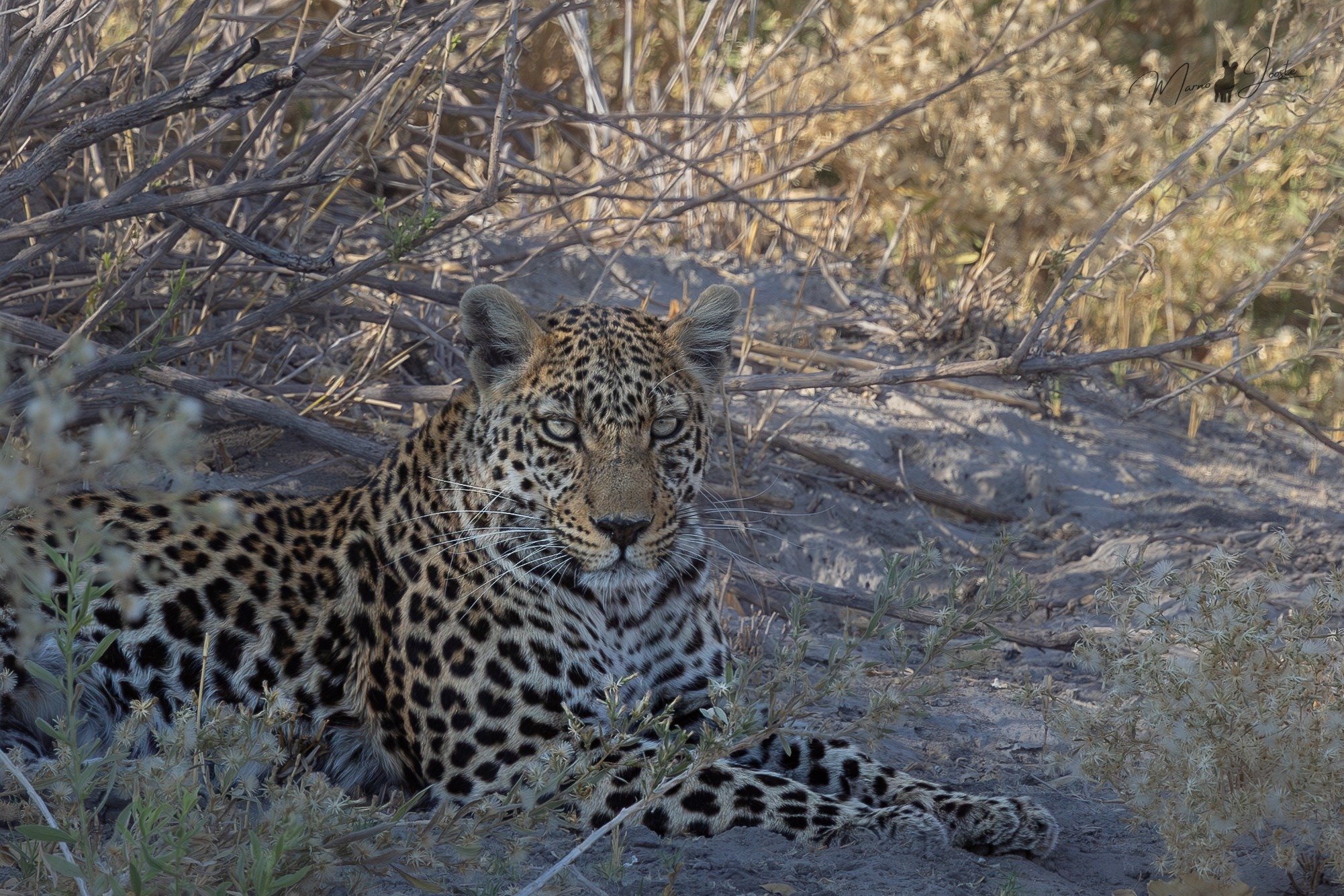
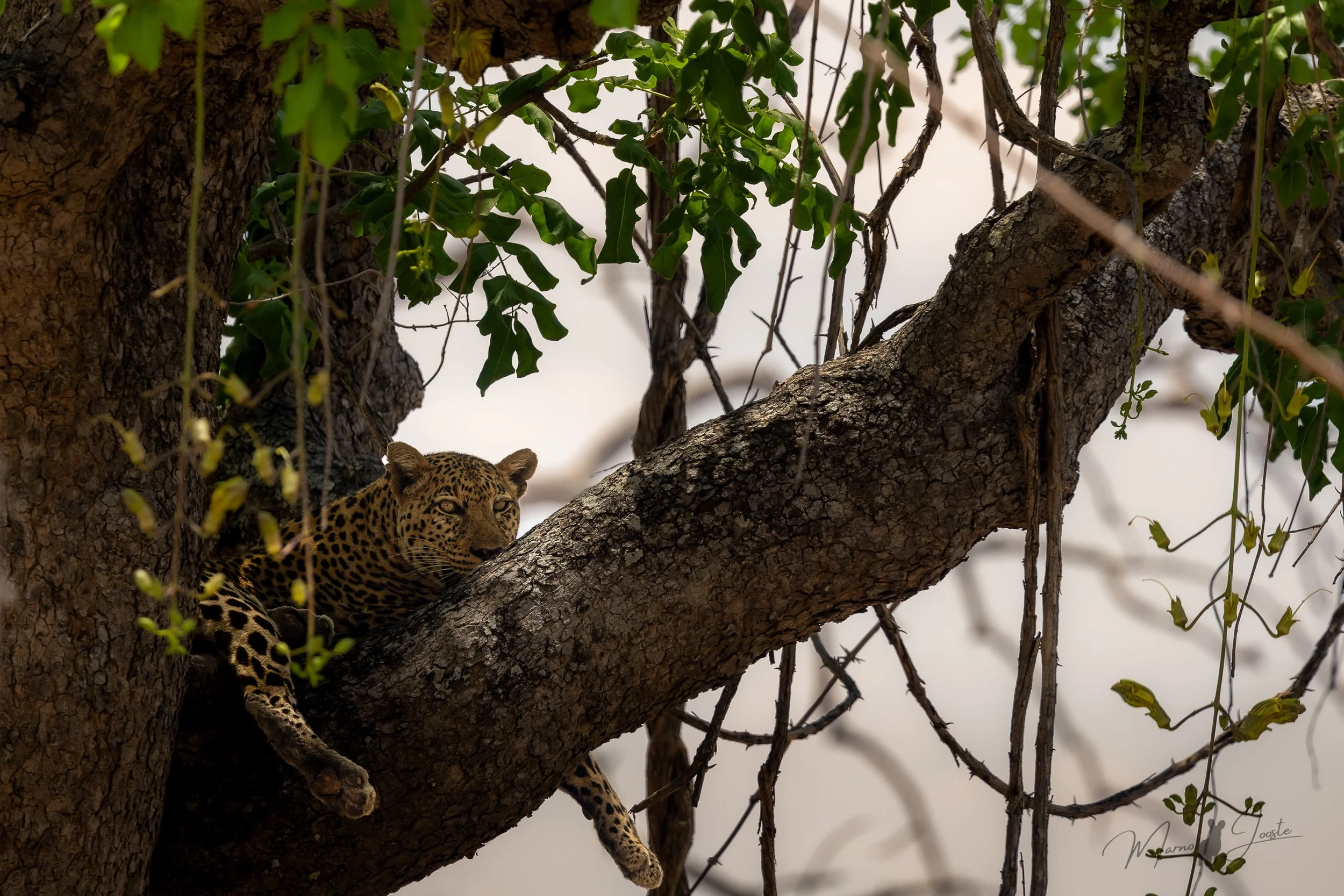
Then came one the highlights of part 2 of our trip — a leopard resting high in a riverside tree, draped elegantly across a branch. After hours of scanning, listening, and waiting, patience was rewarded. The encounter perfectly captured what makes leopard sightings here so special: unhurried, understated, and unforgettable.
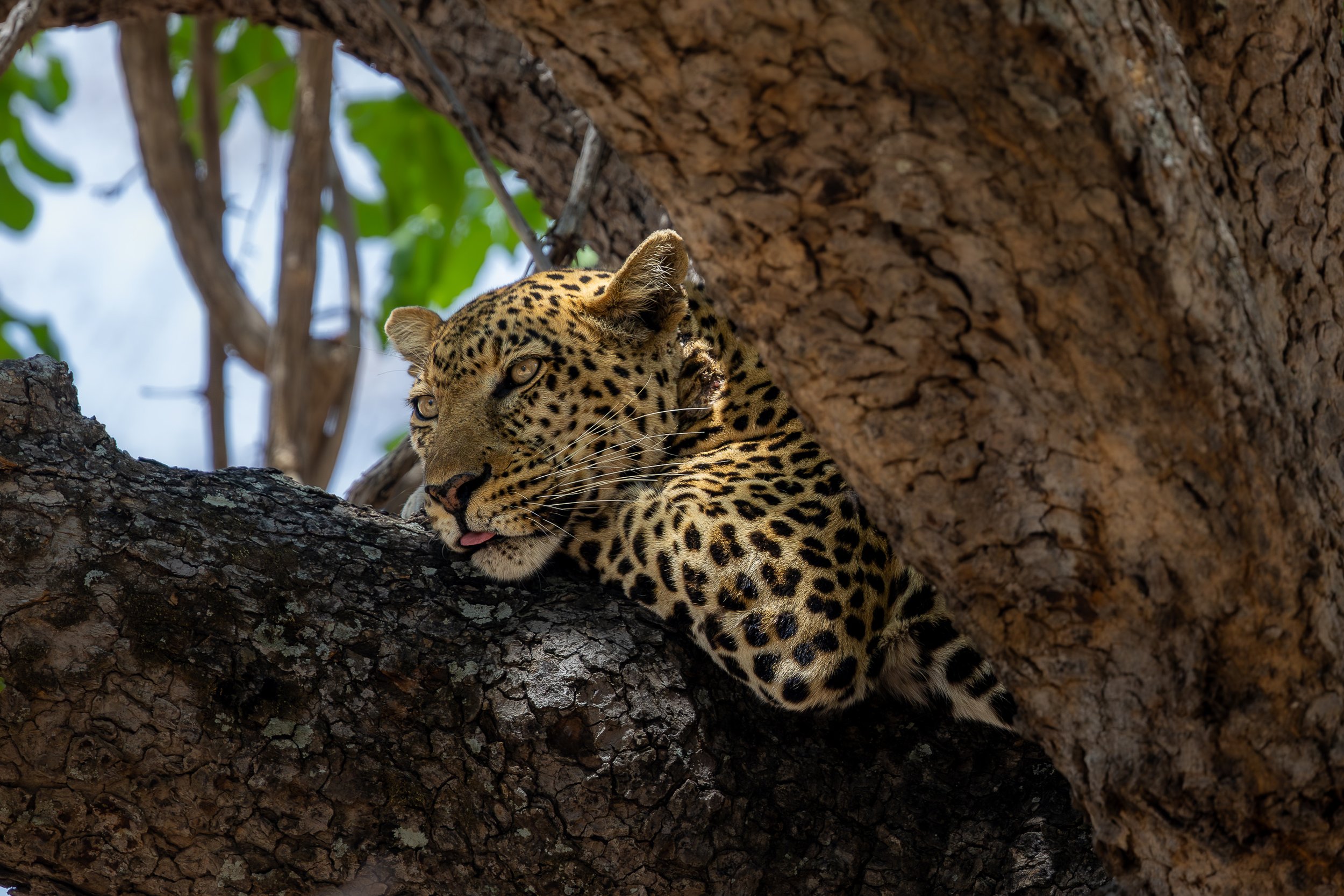
A large male leopard having an afternoon nap in a tree.
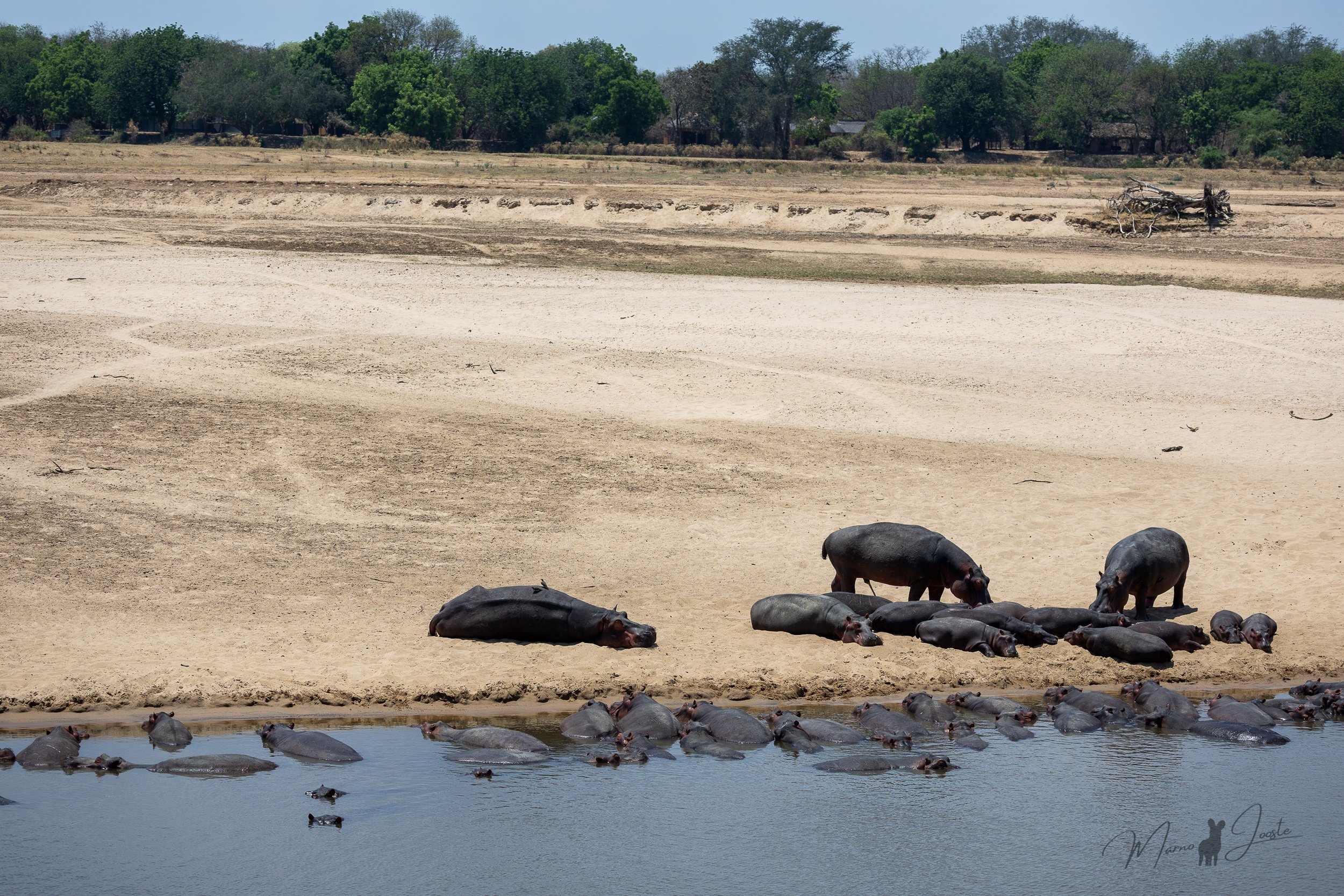
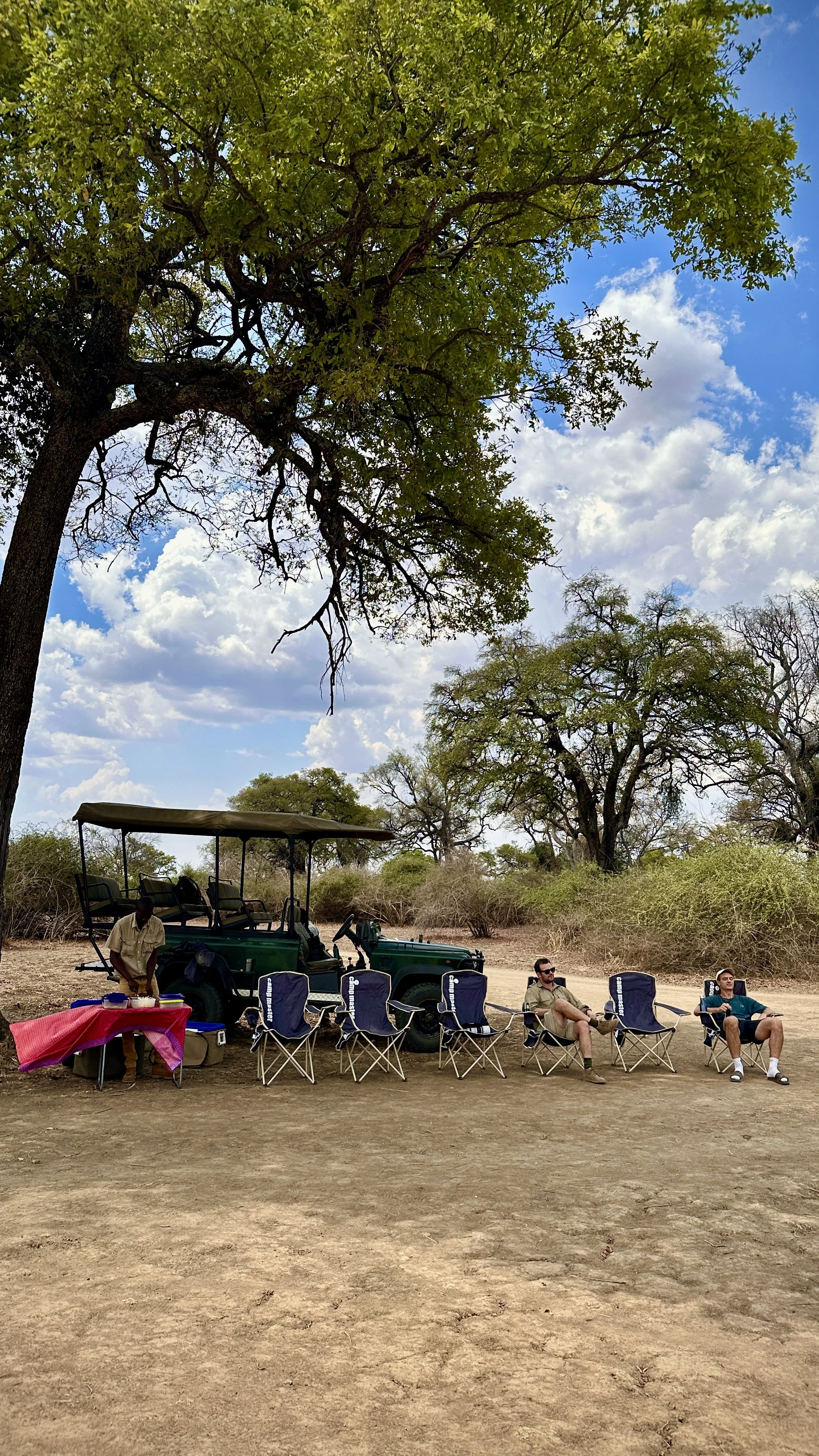
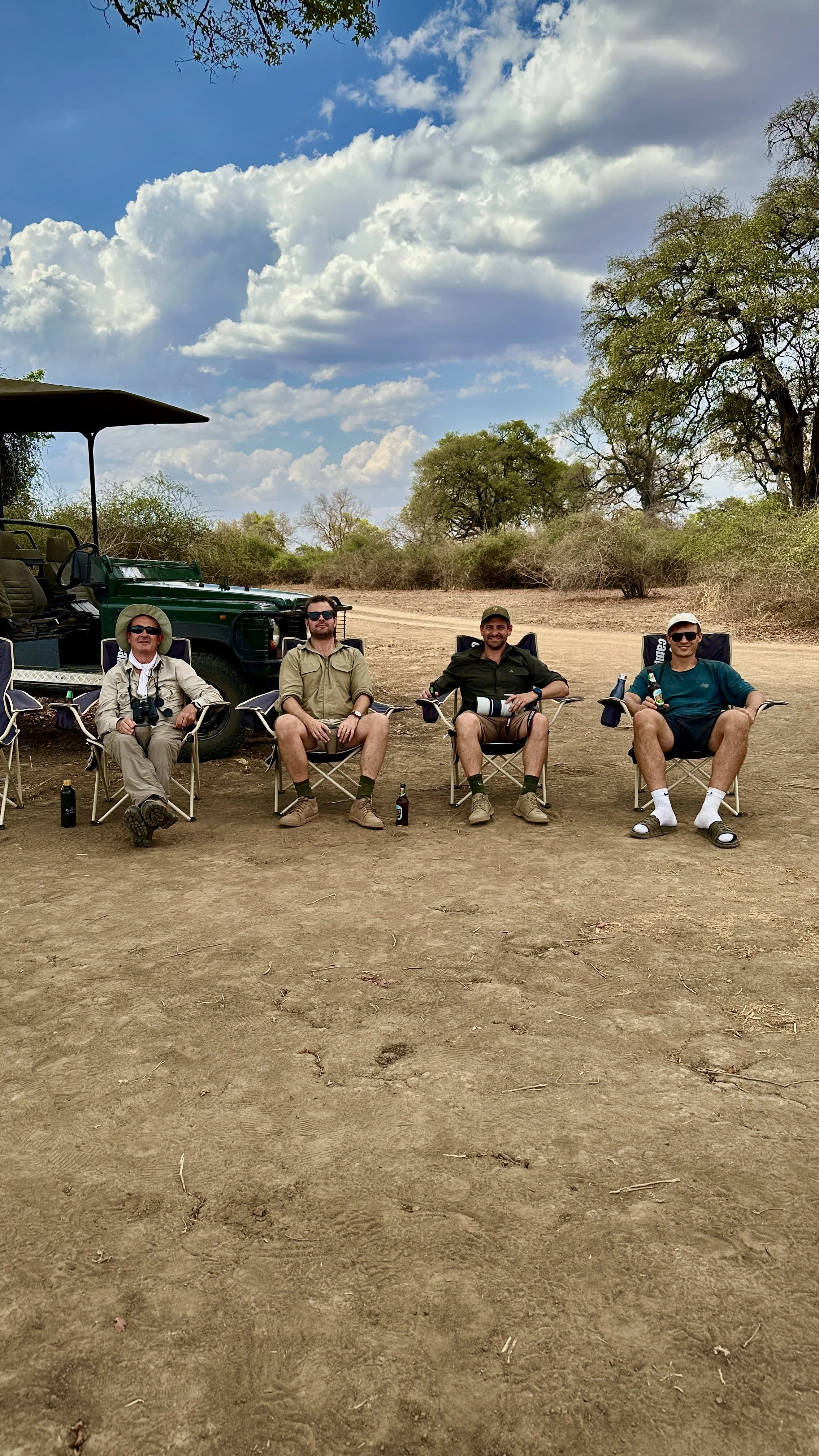
We stopped for lunch beside the river, shaded by trees and accompanied by the sounds of a large pod of hippos. As we ate, a troop of baboons passed behind us, clearly plotting mischief. The ice cold Mosi’s were a great reward in the soaring tempretures for a busy morning searching for predators.
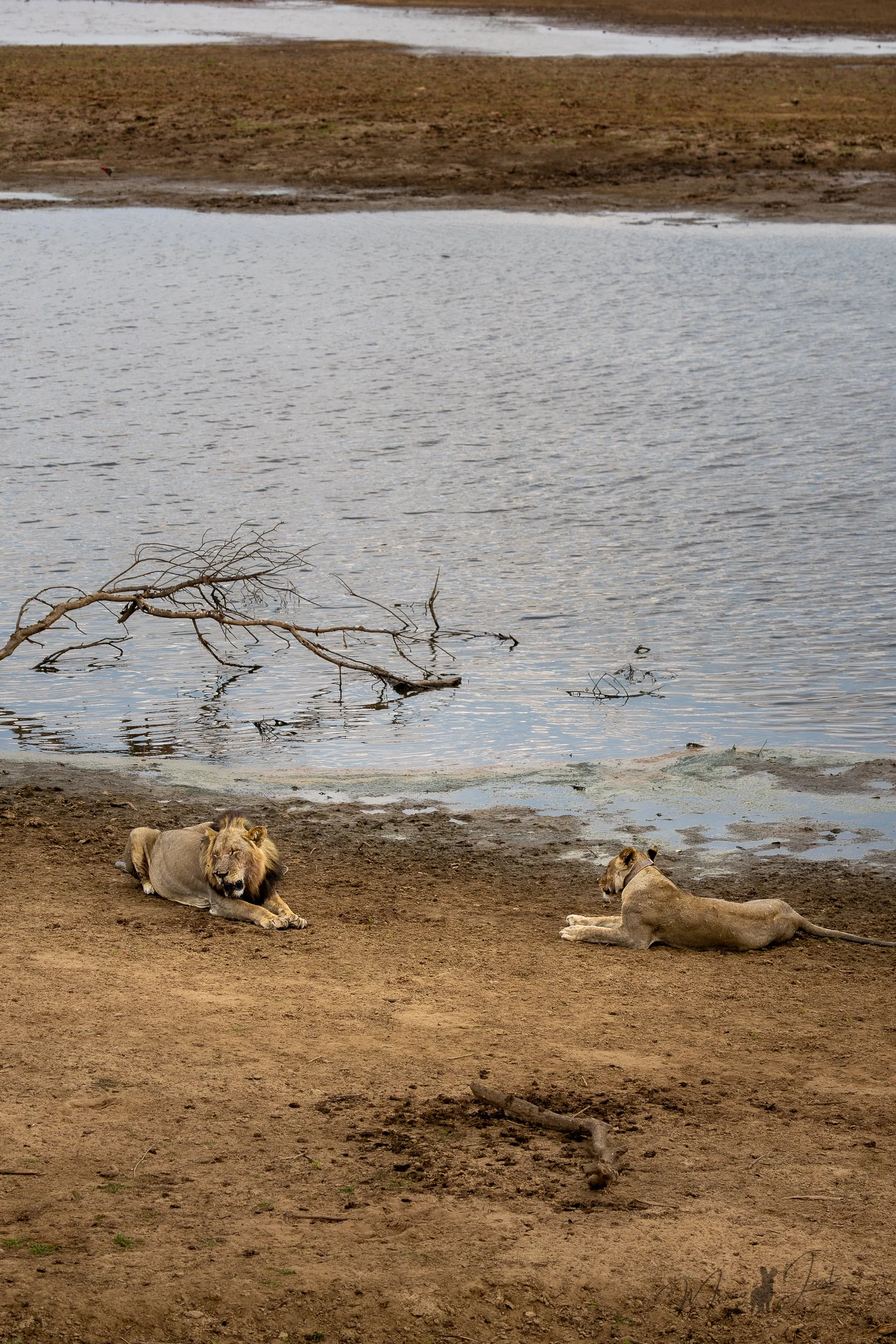
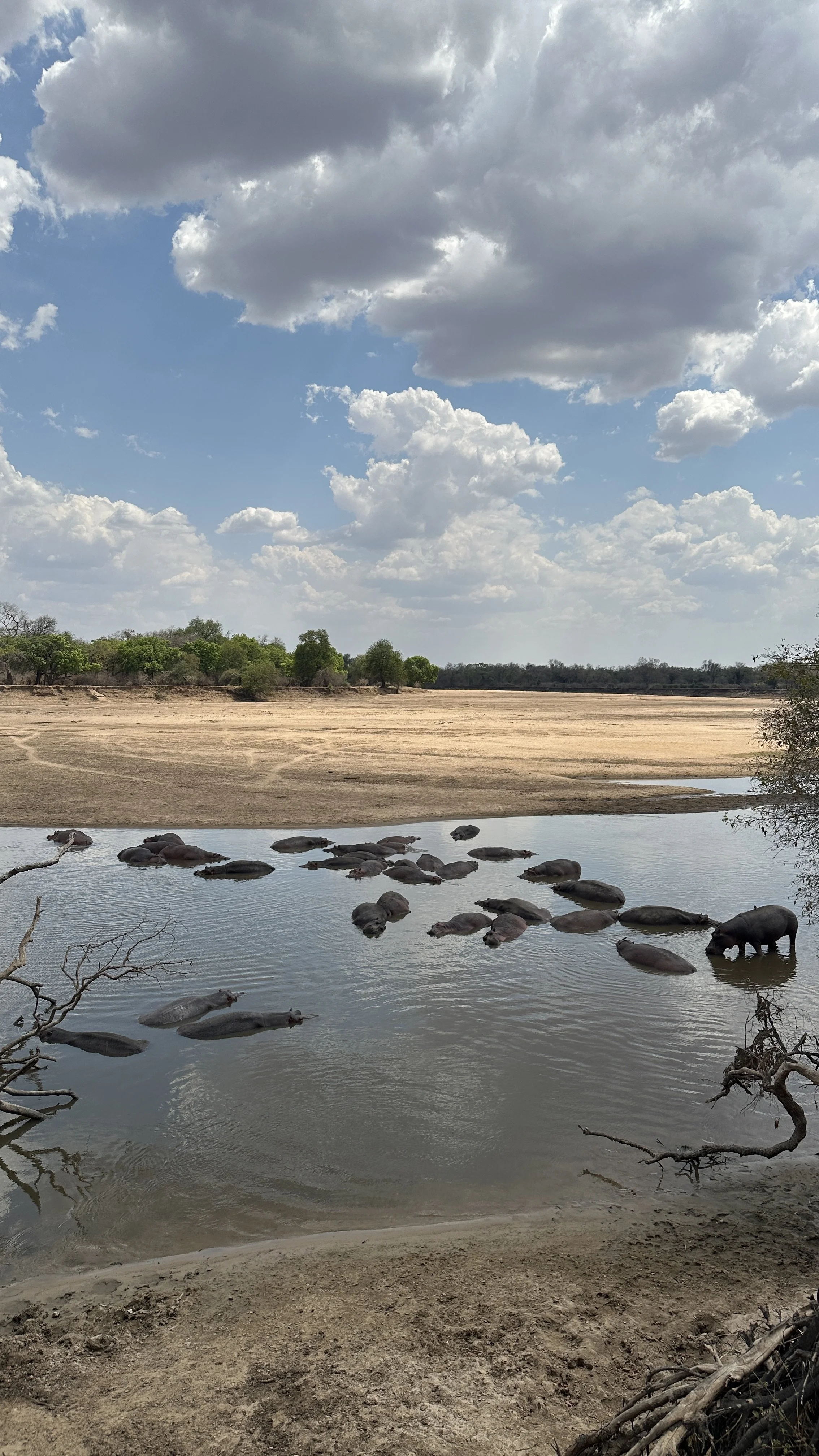
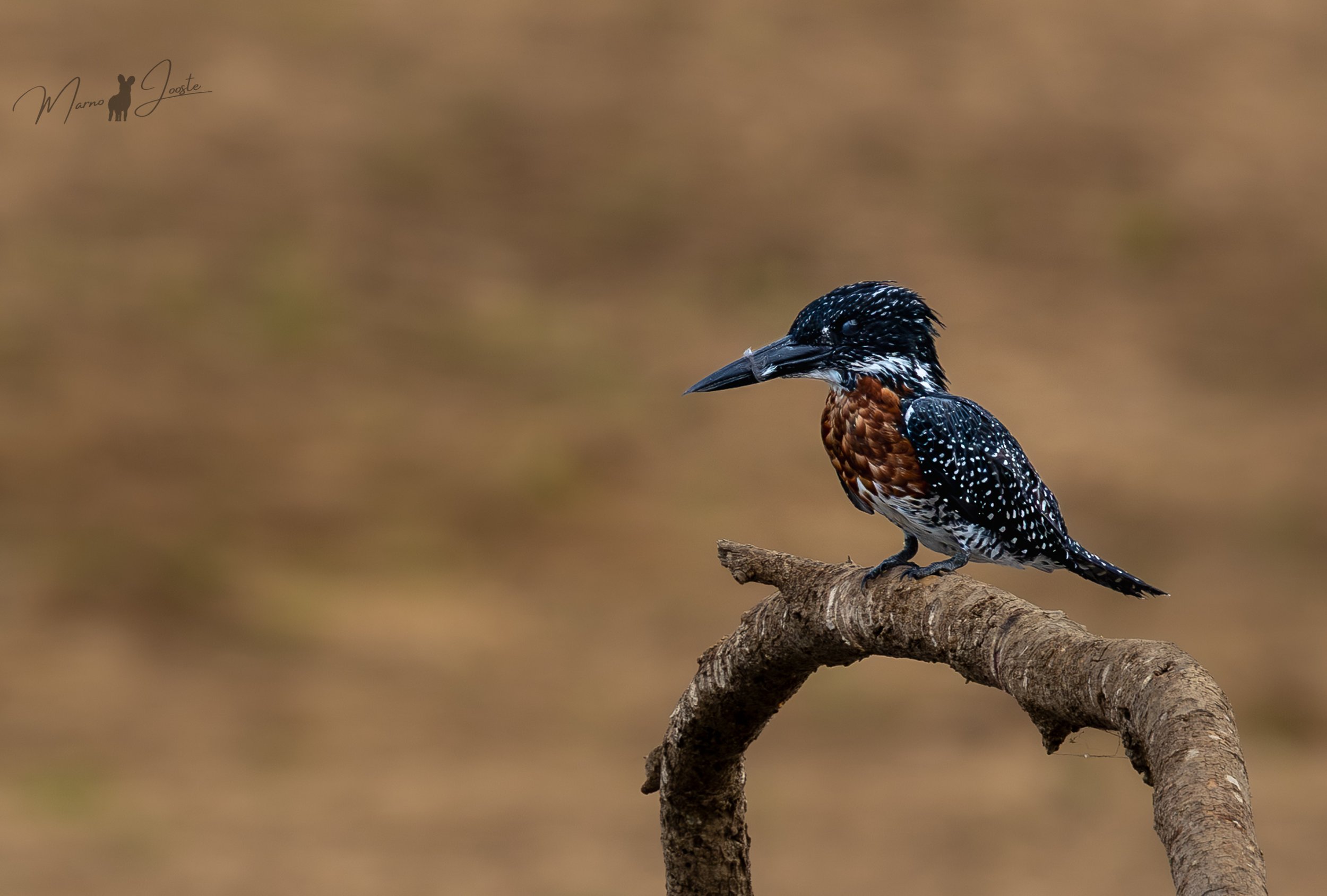
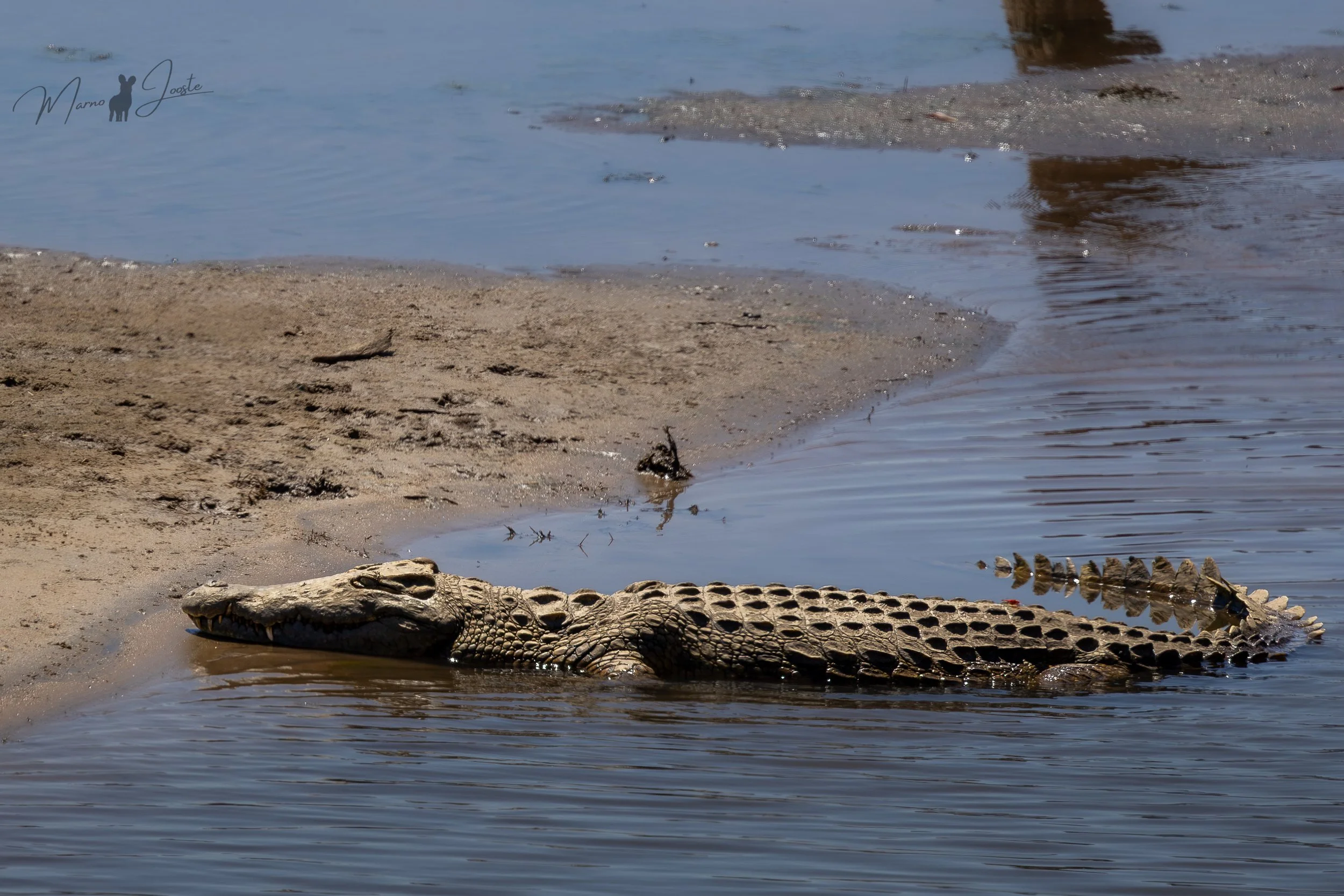
On the return journey, a giant kingfisher sat proudly with its catch, while directly below us a male and female lion lay stretched out at the water’s edge, conserving energy in the midday heat. Later, a martial eagle was spotted with a freshly caught guinea fowl.
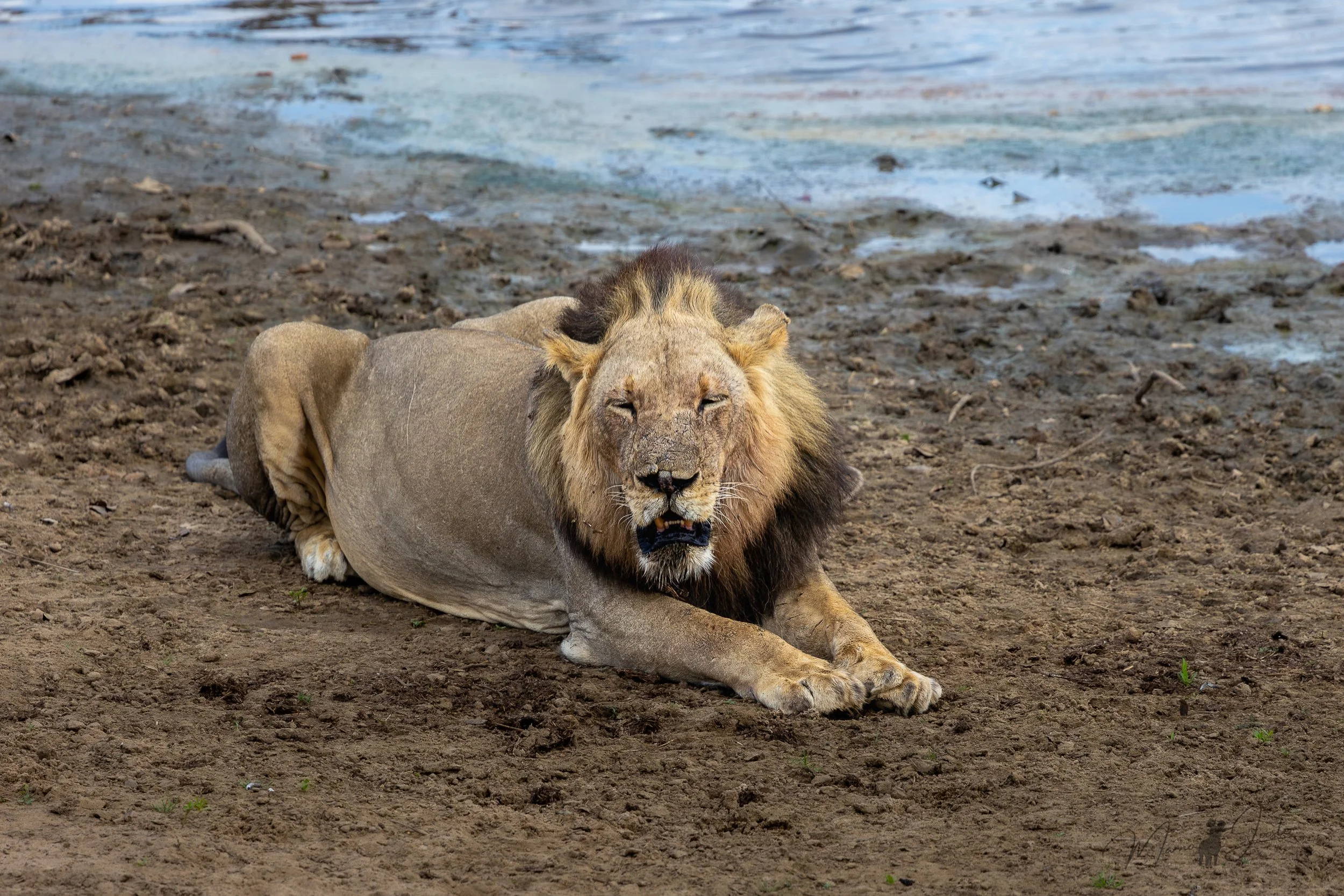
A male lion taking a breather on the banks of the Luangwa river.
As if the day hadn’t already delivered enough, we encountered our first blue wildebeest of the entire trip — a sizable herd across the river — followed by a final, fitting sighting: hartebeest, the emblem of Gavin Opie Safaris. Nkonzi means hartebeest in Nyanja (Chichewa), making the moment a perfect symbolic close to the day.
That night, the wilderness came alive around camp. A large male leopard marked territory nearby with deep, rasping grunts, followed by roaring lions in the distance. The calls continued into the early morning — powerful, close, and unmistakably wild.
Day 10 – A Final Walk & Farewell to the Valley
On our final morning, we set out with one last mission: to try and track down the lions we had heard so clearly through the night. We searched on foot, reading the ground carefully, but the cats had moved on.
Still, there could be no better way to end the journey — walking quietly through the bush, immersed in the rhythm of the land, saying goodbye to South Luangwa in the way it deserves.
A Journey Defined by Patience, Wilderness & Reward
Across nine nights in South Luangwa National Park, the group recorded 35 mammal species, including wild dog, leopard, lion, roan antelope, Thornicroft’s giraffe, and hartebeest, alongside an impressive 101 bird species without even counting all the SBJs (small brown jobs).
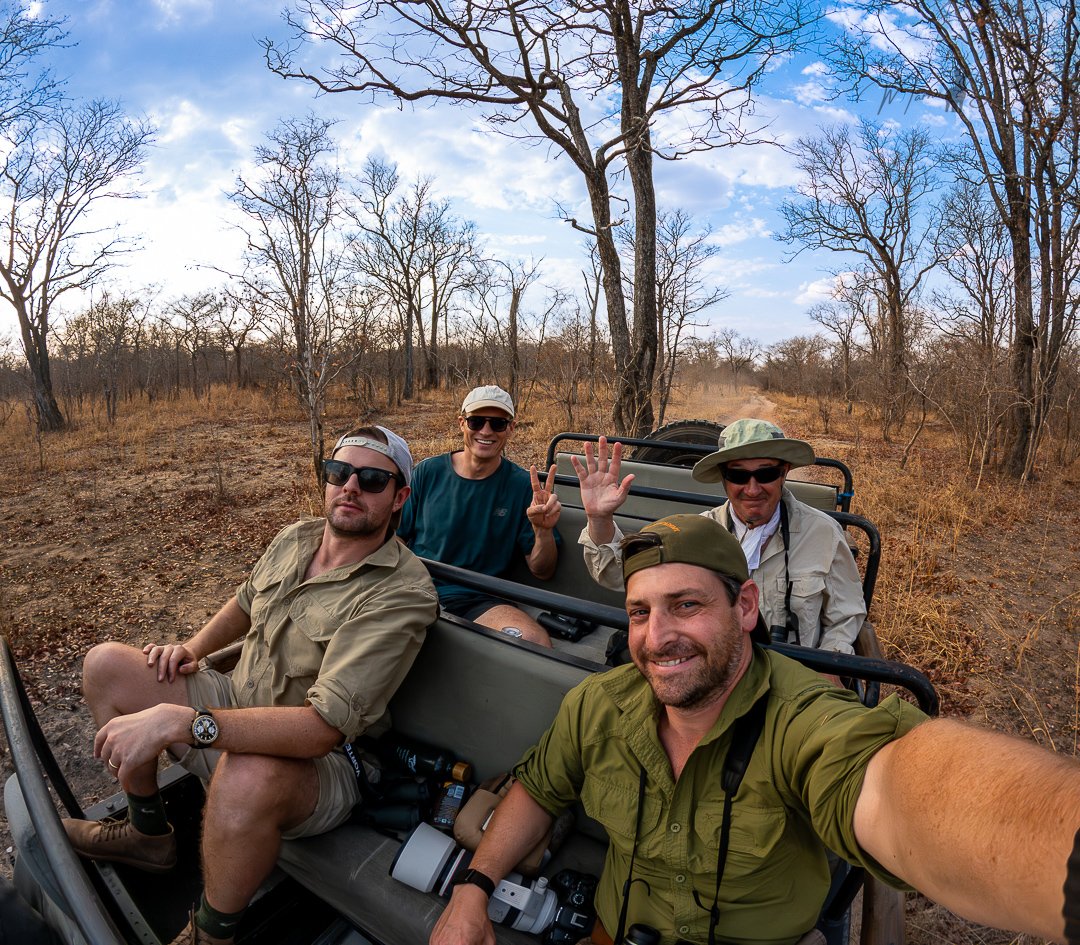
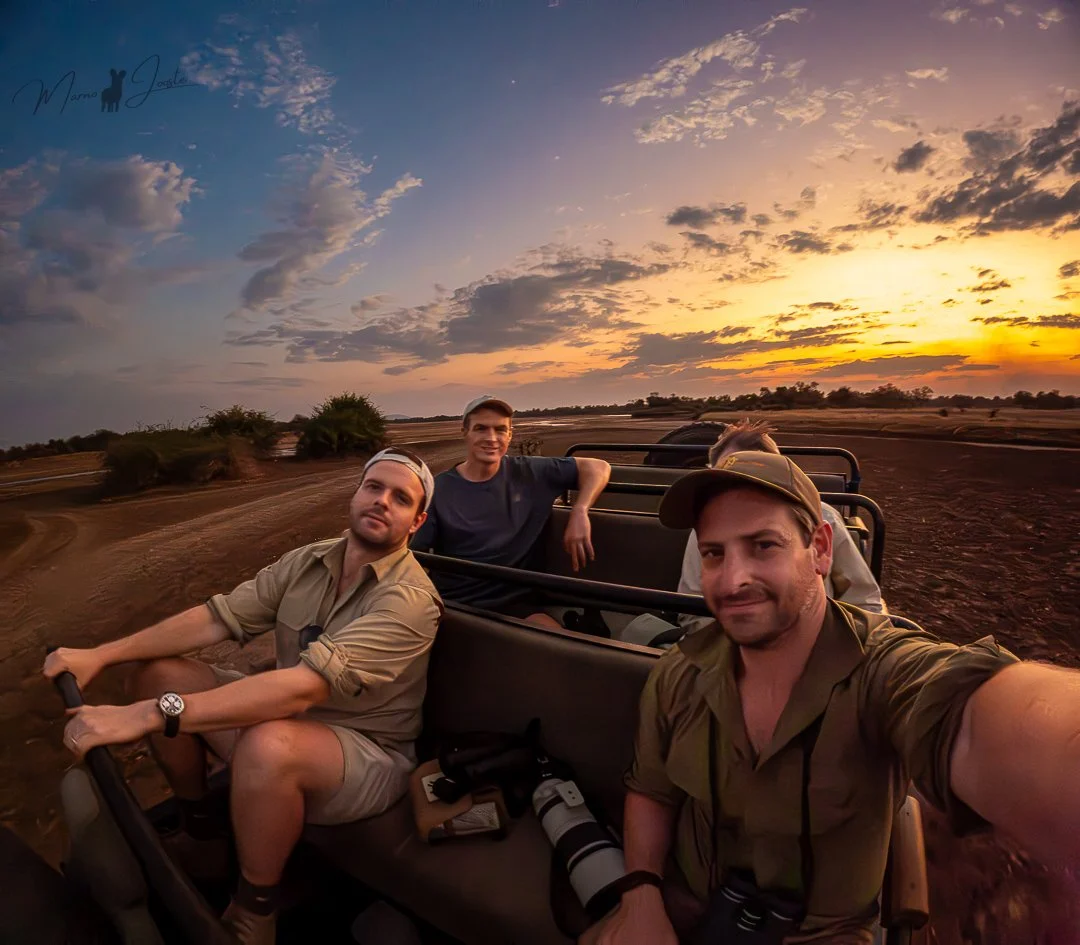
From the structured intimacy of walking safaris to long, quiet drives in remote corners of the park, this journey reinforced a simple truth: the bush rewards those who slow down.
This final chapter completed a safari that perfectly reflects what WildLens Adventures is about — immersive, authentic experiences rooted in respect for wildlife, landscape, and conservation.
If you would like to experience South Luangwa with expert guiding, conservation access, and a small private group — register your interest for our 2026 hosted safari here
Follow @marno_jooste for more content below